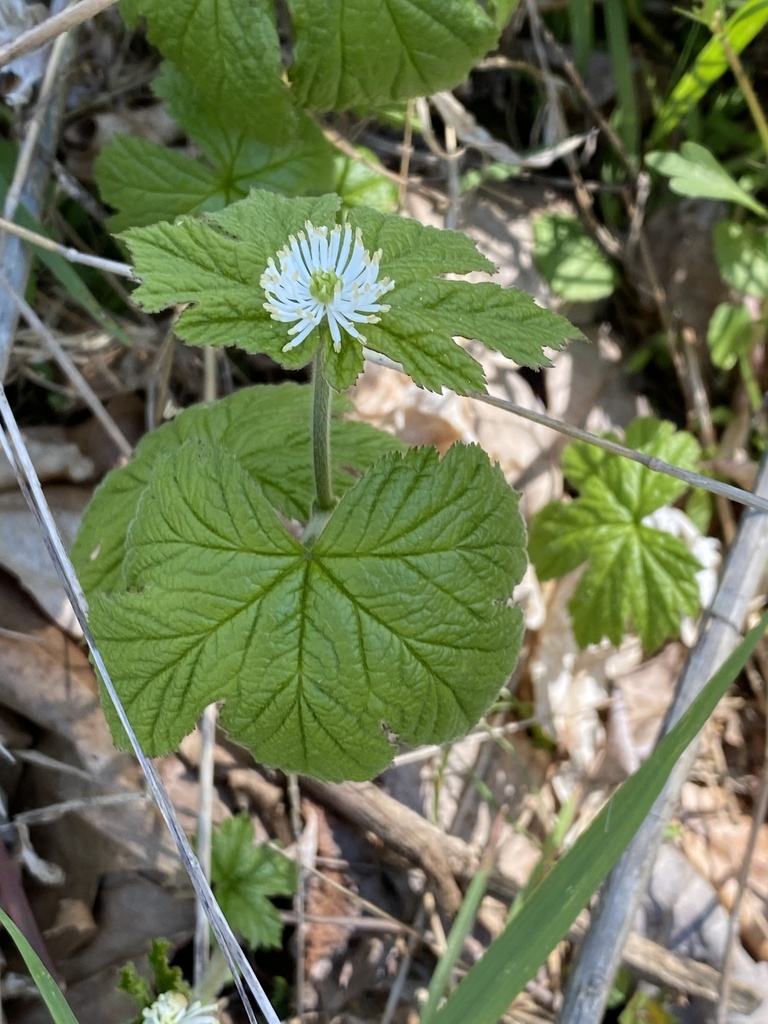
Overview
Goldenseal is a small woodland plant of eastern North America, prized for its bright yellow root and once called 'the American ginseng' for its value. It has long been used for the mucous membranes, the moist linings of the nose, throat, gut and other passages. It is now at risk from overharvesting, so please buy only cultivated root, and consider gentler alternatives where they will do.
Plant family
Ranunculaceae
Parts used
Root and rhizome.
Actions
Astringent · Antimicrobial · Bitter · Cholagogue · Tonic · Anti-inflammatory · Alterative · Anti-catarrhal · Antibacterial · Antifungal · Laxative · Oxytocic
Affinities
Mucous membranes · Digestive tract
Body systems
Digestive · Respiratory · Integumentary · Immune
Taste profile
Very bitter. The fresh root smells strong and disagreeable; it smells sweeter, almost like licorice, as it ages.
Energetics
Cooling and drying.
Traditional use
Native American peoples used goldenseal for digestive complaints, wounds, skin and eye problems, and as a yellow dye. In Western herbalism it has been used as a bitter tonic for the digestion, for the mucous membranes of the nose, throat, gut and vagina, for catarrhal congestion, and as an external wash for the skin, eyes and gums. It is also counted among the bitter alteratives for a stagnant, torpid system.
Current use
Goldenseal is marketed for colds and upper respiratory support, catarrh (excess mucus), digestive upset and diarrhea, and as a wash for the mouth, gums and skin, including acne. Its alkaloids, especially berberine and hydrastine, are antimicrobial and astringent in the lab, but rigorous human studies are lacking.
Preparation
The dried root and rhizome are taken as a tincture or in capsules, or as a weak infusion of a scant half-teaspoon of powder in a cup of hot water. A root infusion is used as an external wash or mouthwash. When buying, look for labels that name the part (root and rhizome) and say organically cultivated, farm-grown or forest-grown (wild-simulated), from suppliers who openly describe their sourcing.
Dosage guidance
Short-term only. Typical practitioner doses are 2 to 4 mL of tincture or 0.5 to 1 g of dried root up to three times daily; small studies used about 3 g per day without serious harm. Please limit courses to a few weeks, preferably under a practitioner's guidance, and do not exceed about three to four months.
Cautions & contraindications
Please don't use goldenseal during pregnancy or breastfeeding, and never give it to infants. Why: its berberine can push bilirubin (a yellow waste pigment) off the blood proteins that carry it, and in newborns, whose livers can't clear bilirubin well, that free bilirubin can build up and damage the brain (kernicterus); it may also stimulate uterine contractions. Please avoid it if you have high blood pressure, heart disease, epilepsy or clotting problems. It changes how the body processes many medicines because it blocks liver enzymes (CYP3A4 and CYP2D6) that break drugs down; in one study it also lowered metformin levels by about 25 percent, which could weaken blood-sugar control. Please talk to your provider if you take any medication. Large amounts are toxic, so please keep to short courses. Purchasing: please choose only cultivated or certified organic, sustainably grown root, never wild-harvested.
Evidence notes
From Winter's HERB303 notes (harvest, identification and constituent notes only). Web-sourced seed pending Winter's review. Sources: NCCIH Goldenseal (https://www.nccih.nih.gov/health/goldenseal); Plants For A Future (https://pfaf.org/user/Plant.aspx?LatinName=Hydrastis+canadensis)