Overview
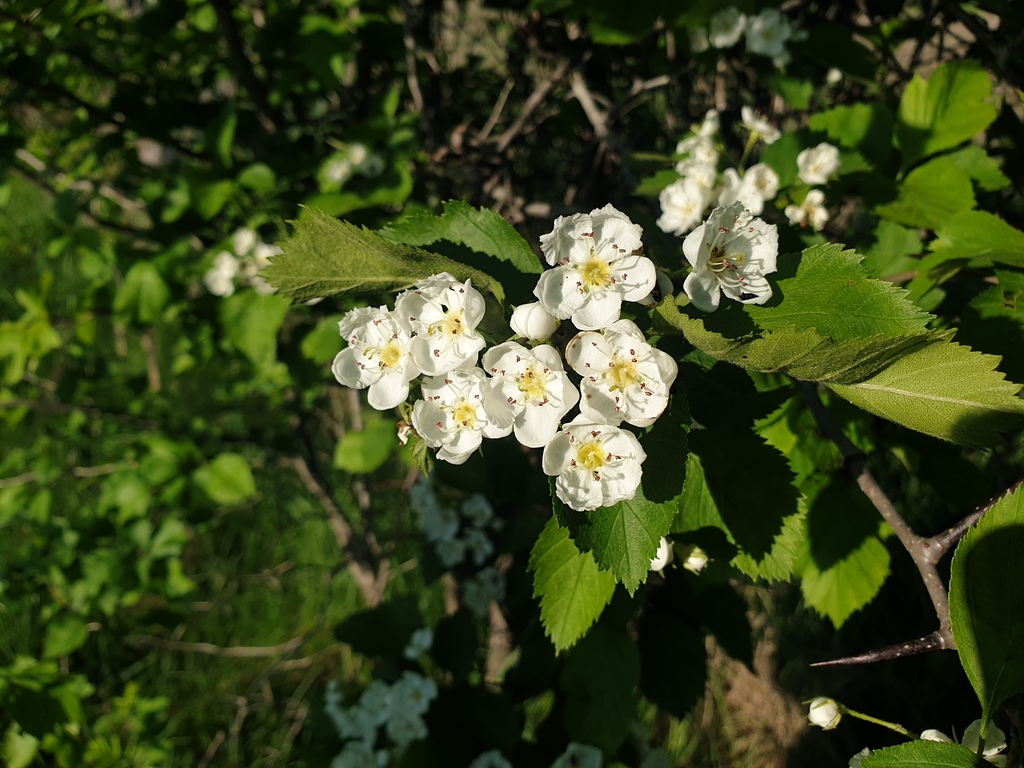
Hawthorn is a thorny shrub of the rose family whose spring blossoms and red autumn berries have graced hedgerows for centuries. It is the classic heart herb: medicinally it works on the physical heart, and energetically it helps soothe a broken heart and emotionally difficult times. It is a herb to use slowly and steadily over time.
Plant family
Rosaceae
Parts used
Berries, flowers and leaves.
Actions
Cardiotonic · Hypotensive · Vasodilator · Antioxidant · Astringent · Antispasmodic · Nervine · Diuretic · Digestive
Affinities
Heart · Circulation
Body systems
Cardiovascular · Digestive
Taste profile
Berries mildly sour and sweet, not very appetizing raw; leaf and flower mildly astringent and slightly bitter.
Energetics
Neutral to slightly cooling; moistening (the berry) and gently astringent.
Traditional use
Traditionally hawthorn was used to support the heart and circulation, for palpitations and nervous heart complaints, for digestion (especially Chinese hawthorn berry for food stagnation after rich, fatty meals), for the kidneys and bladder, and on the skin for sores and frostbite. Herbalist Jim McDonald describes it as helping 'the heart trust again' after heartbreak.
Current use
Hawthorn is widely used to support heart and blood vessel health. Herbalists describe it as a trophorestorative cardiac tonic, a herb that nourishes and strengthens the heart muscle and helps steady its rhythm, and it is traditionally indicated for high blood pressure, narrowing of the arteries and angina. Research in mild heart failure has shown improved exercise tolerance in some trials but conflicting results overall. On the emotional side, I use hawthorn when someone is going through a difficult time, and it pairs particularly well with lemon balm when the trouble is grief or heartache; it is less a remedy for anxiety or nervousness, although it can be a helpful companion when grief and anxiety feed each other.
Preparation
Berries: made into tea, tincture, syrups, cordials, jams and preserves; they are richer in the procyanidins and are traditional for long-term heart nourishment and, in Chinese practice, for digestion. Flowers and leaves: gathered in spring as a tea or tincture; they are richest in flavonoids such as vitexin and are the part used in most European standardized extracts for heart function. Many herbalists combine berry, leaf and flower for a balanced remedy. A berry cordial is a traditional way to enjoy it after the first autumn cold snap.
Dosage guidance
Leaf and flower extract: commonly 160 to 900 mg daily in two or three doses (Commission E). Tea: 1 to 2 g of dried leaf-and-flower or crushed berry steeped in a cup of hot water, up to three times daily. Tincture: 1 to 2 mL three times daily. It works gradually, over 6 to 8 weeks; studies have used it for up to 16 weeks or longer. If you have any heart condition, please use it only with your provider's okay.
Cautions & contraindications
If you have a heart condition or take heart or blood pressure medicine (such as digoxin, beta-blockers, nitrates or calcium-channel blockers), please talk with your provider before using hawthorn, as it may add to their effects; one study linked a hawthorn product to faster progression of heart failure, possibly through a drug interaction. Its safety in pregnancy and breastfeeding has not been established. Possible side effects include dizziness, nausea and digestive upset. Please beware of 'tejocote root' products, some of which have contained toxic yellow oleander.
Evidence notes
Winter's HERB202 page is images only; HERB302 page gives only names (C. laevigata, C. cuneata, C. oxyacantha, C. monogyna, C. pinnatifida) and family. Web-sourced seed pending Winter's review. Sources: NCCIH: Hawthorn (https://www.nccih.nih.gov/health/hawthorn); Plants For A Future (https://pfaf.org/user/Plant.aspx?LatinName=Crataegus+monogyna)