Overview
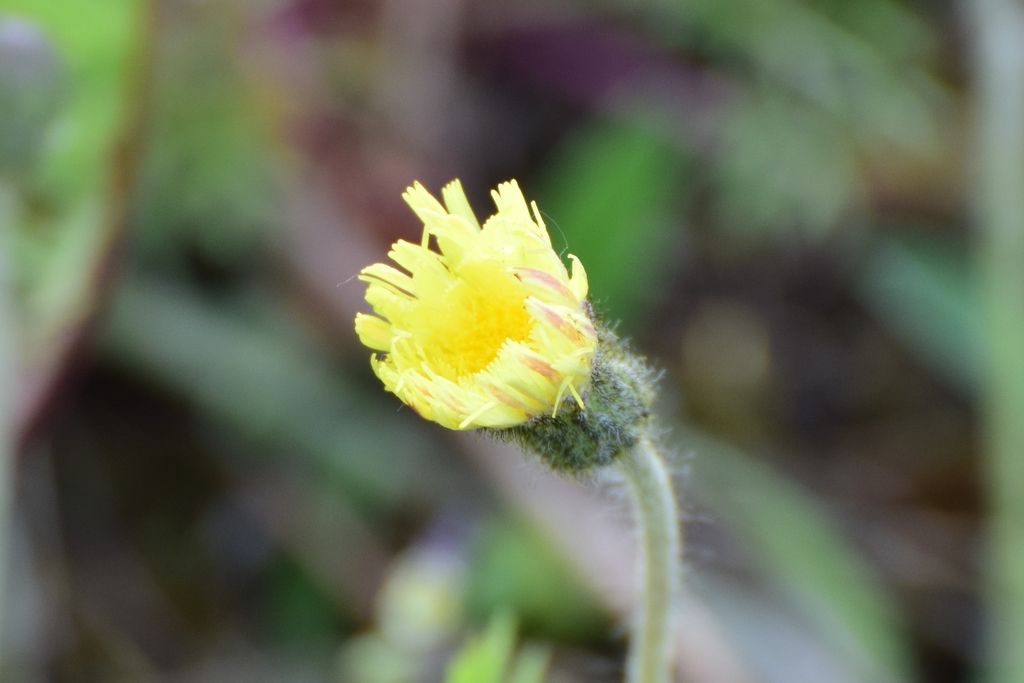
Mouse-ear hawkweed is a small, hairy, dandelion-like plant of the daisy family that spreads in low mats of furry, mouse-ear-shaped leaves with lemon-yellow flowers. It is easily mistaken for a dandelion, but it is smaller, denser and covered in soft hairs. Slightly bitter and astringent (tightening and drying), it is used for the lungs and to help stop minor bleeding, and herbalists in Britain and Europe still value it for whooping cough.
Plant family
Asteraceae (formerly Compositae)
Parts used
Leaves and flowers, collected while flowering.
Actions
Antibacterial · Astringent · Diuretic · Cholagogue · Expectorant · Styptic · Diaphoretic · Tonic
Body systems
Respiratory · Urinary · Digestive
Taste profile
Slightly bitter and astringent, with a faint aroma.
Energetics
Cooling and drying.
Traditional use
It has long been used by British and European herbalists for whooping cough and other lung complaints, and Culpeper and Grieve record it for wounds, bleeding, jaundice and liver complaints, and as a mouthwash and gargle.
Current use
Mouse-ear hawkweed is used to support the lungs through coughs, asthma and whooping cough, for which European herbalists consider it a specific (a remedy matched closely to that condition), and during fevers. It is used as a gargle for sore throats, for kidney and bladder complaints and water retention, for chronic loose stools, and as a styptic, meaning something that stops bleeding, for minor wounds, nosebleeds and hemorrhoids. Its coumarin-like compound umbelliferone has antibacterial activity; it is reported to clear undulant fever (brucellosis) in goats. It is also a gentle diuretic and cholagogue, meaning it encourages the flow of bile.
Preparation
The leaves and flowers are collected while the plant is in flower. It can be prepared as a decoction (simmered in water), fluid extract, infusion (steeped in water), powder or tincture. For lungs, fevers and whooping cough the infusion or tincture is used; for kidney and bladder complaints, water retention and loose stools, the decoction, tincture or fluid extract. On bleeding wounds the powder is sprinkled on, or the fresh leaf or juice applied; for nosebleeds the fine powder was traditionally sniffed; the infusion makes a gargle; and a decoction made in milk is used externally for hemorrhoids. It combines well with other expectorant (mucus-clearing), demulcent (soothing, coating) and diaphoretic (sweat-promoting) herbs.
Dosage guidance
For adults, three to four times a day: decoction 2 to 4 tablespoons; fluid extract 2 to 4 mL; infusion 4 to 6 tablespoons; tincture 3 to 6 mL; powder up to 1 teaspoon.
Cautions & contraindications
Proper identification is crucial. Mouse-ear hawkweed has many look-alikes: other hawkweeds (Pilosella and Hieracium species), catsears (Hypochaeris, sometimes called flatweed), hawkbits (Leontodon and Scorzoneroides), and dandelion and its relatives. These yellow, dandelion-like daisy-family plants may have no medicinal value at all, or very different properties, so please don't harvest unless you are sure. Clues for mouse-ear: low mats spreading by runners, leaves with long white hairs (whitish-felted underneath), a single lemon-yellow head on an unbranched leafless stem, often with a red stripe under the outer petals; hawkbits have forked (Y-shaped) hairs and catsears have bracts among the florets. When in doubt, check a local flora or an expert. Please be careful if you are sensitive to plants in the daisy family (Asteraceae), such as ragweed, chrysanthemums, marigolds and daisies, because mouse-ear may cause an allergic reaction. Avoid medicinal amounts in pregnancy and breastfeeding, as there is little safety information. No drug interactions have been reported.
Evidence notes
From Winter's HERB303 expectorant-herbs notes (HERB 303 textbook).