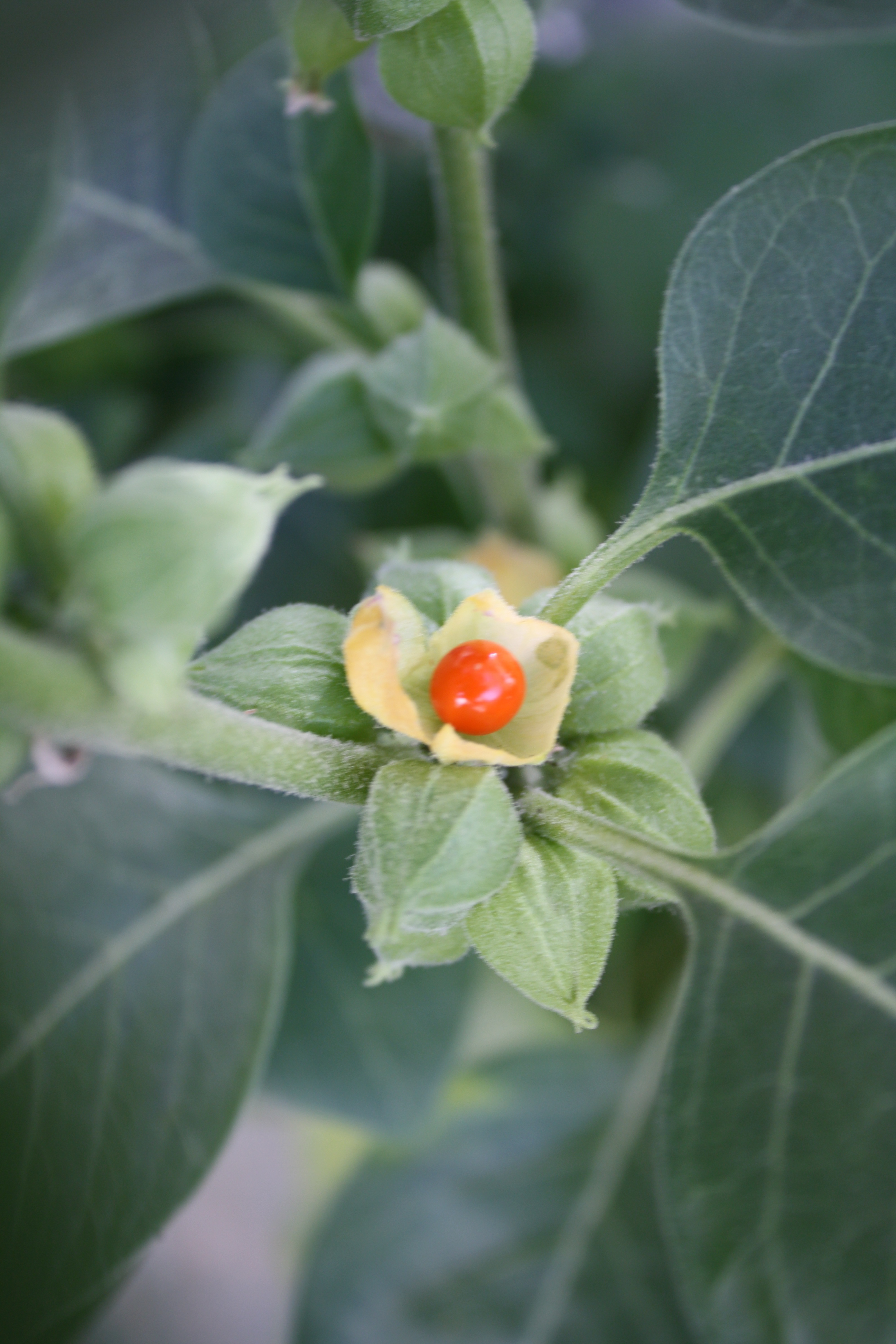
Overview
Arthritis. Anxiety. Insomnia. Chronic liver disease. Tuberculosis. Tumors. Oral use also listed: aphrodisiac, emmenagogue, decreasing inflammation, emaciation, fibromyalgia, hiccups, immunomodulatory effects, improving cognitive function, infertility (men and women), menstrual disorders, preventing effects of aging (per text). Topical use: backache, hemiplegia, ulcerations (per text).
Plant family
Solanaceae
Parts used
Root, berries, and leaves
Actions
Adaptogen · Nervine · Tonic
Affinities
Nervous · Immune · Reproductive
Body systems
Nervous · Immune · Reproductive
Taste profile
Bitter
Tissue states
Cold · Dry · Atrophy
Traditional use
Ayurvedic rasayana-style tonic for vitality, strength, and convalescence/depletion patterns; used for tumors, inflammation, arthritis, asthma, hypertension, and elderly cognitive concerns in traditional framings (per text).
Current use
Arthritis. Anxiety. Insomnia. Chronic liver disease. Tuberculosis. Tumors. Oral use also listed: aphrodisiac, emmenagogue, decreasing inflammation, emaciation, fibromyalgia, hiccups, immunomodulatory effects, improving cognitive function, infertility (men and women), menstrual disorders, preventing effects of aging (per text). Topical use: backache, hemiplegia, ulcerations (per text).
Preparation
Powder; tonic; extract; decoction; poultice
Dosage guidance
Powder: 1–6 g daily in capsule, or up to 5–10 g as an occasional tonic. Tonic: 1/2–3/4 t (2–4 mL) 3× daily. Extract: 2 T up to 3× daily. Decoction: boil 3/4–1 1/4 t (3–6 g) root in water for 15 min; drink 3 cups/day. Poultice: topical use for sore joints.
Cautions & contraindications
May affect thyroid function tests (TSH/T3/T4) and may stimulate thyroid synthesis/secretion. Contraindicated with sedatives or anxiolytics (possible potentiation). Contraindicated for people with stomach ulcers (possible GI irritant effect). Do not use during pregnancy (anecdotal abortifacient concern when used orally). Use cautiously with hypotension or antihypertensives, peptic ulcers, sedative drugs, and thyroid disorders (per text). AHPA Class 2b (not to be used during pregnancy).
Evidence notes
Course text summarizes wide-ranging preclinical findings (e.g., NFkappaB inhibition, antimicrobial activity, apoptosis/cancer cell line effects) and includes clinical trial notes for anemia and arthritis; translate to practice cautiously and screen for contraindications.