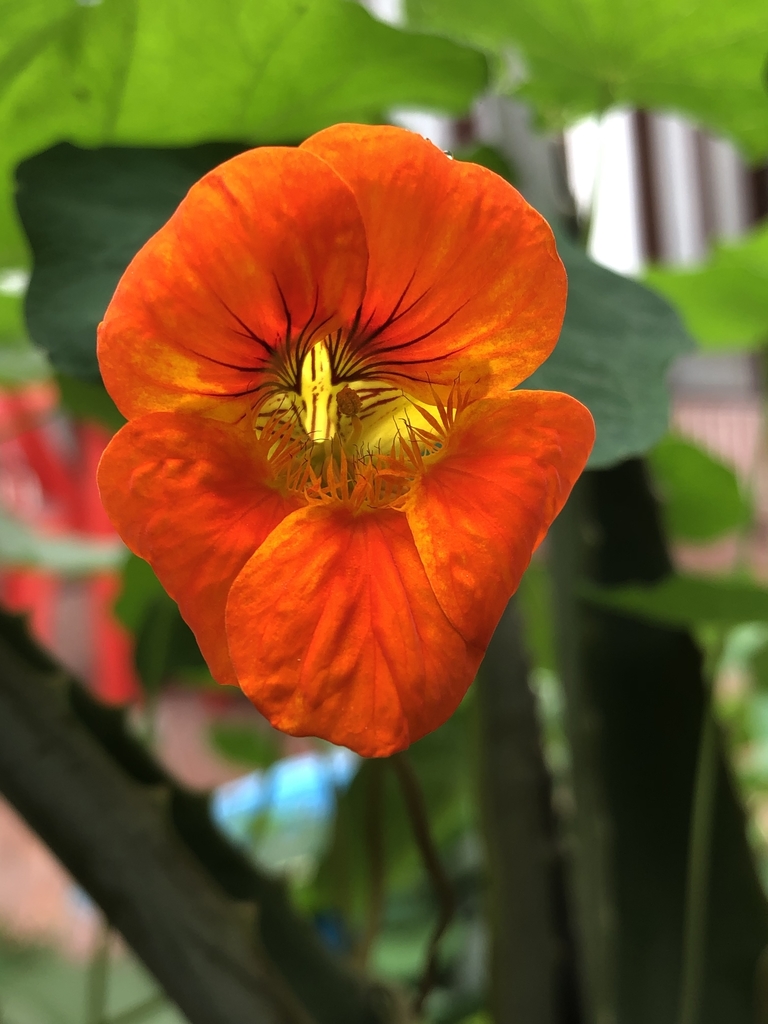
Overview
Nasturtium is a cheerful, trailing garden flower with round leaves and a peppery bite like watercress. Despite the shared name, it is not the same plant as watercress (Nasturtium officinale). Its leaves, flowers and seeds are all edible, and it is studied in my coursework as one of the classic antiseptic herbs.
Plant family
Tropaeolaceae
Parts used
Leaves (most used), flowers and seeds; the whole fresh plant.
Actions
Antimicrobial · Antibacterial · Antifungal · Antiseptic · Expectorant · Diuretic · Vulnerary · Stimulant
Affinities
urinary tract · lungs · skin
Body systems
Urinary · Respiratory · Integumentary
Taste profile
Hot and peppery, like watercress; the seeds are very hot.
Energetics
Warming and stimulating.
Traditional use
In the Andes, where it comes from, nasturtium was used as a disinfectant and wound herb and as an expectorant (an herb that helps clear mucus) for chest complaints. A leaf infusion was taken to strengthen resistance to infection and clear catarrh (excess mucus), and an external wash was used for minor cuts and skin eruptions. A hot poultice of crushed seeds was laid on the chest or on sore spots in home-remedy traditions. Gardeners also plant it to draw aphids away from crops like broccoli.
Current use
Germany's Commission E approved nasturtium herb for urinary tract infections and for cough and bronchitis. In Germany it is sold combined with horseradish root in a product studied for preventing recurrent bladder infections and for sinus and chest infections. Its sharp mustard-oil compounds show antibacterial activity in lab and clinical studies, which supports this traditional antiseptic reputation.
Preparation
The fresh leaves and flowers are eaten raw in salads and sandwiches, and the green seeds can be pickled in vinegar like capers. To release the antibacterial compounds, the whole plant can be finely chopped and soaked in warm water for about 10 minutes before use; the enzyme that makes the active mustard oils works when the fresh plant is crushed. A leaf infusion (tea), a skin wash, a poultice of crushed seeds, a fomentation, a salve or a liniment can all be made. It is most potent just before it flowers. Leaves are the gentlest part; the seeds are the hottest and most irritating, so they are kept mainly for poultices.
Dosage guidance
Food amounts are generally safe for adults. Commission E's daily dose for the herb is about 30 g of fresh leaf (or a standardised product); please follow product labels and use it short-term. Not for infants and young children.
Cautions & contraindications
Please avoid medicinal amounts for infants and small children, and if you have stomach or intestinal ulcers or kidney disease. The active compound, benzyl isothiocyanate (a mustard oil released when the plant is crushed), is a strong irritant: it reacts with the lining of the stomach, gut and kidneys, which is how it fights microbes but also why large amounts can cause stomach upset and irritate inflamed tissues. Skin contact with the crushed fresh plant can redden sensitive skin.
Evidence notes
Winter's HERB303 page is a course resource template only (name, Latin name, family).
Web-sourced seed pending Winter's review. Sources: Plants For A Future (https://pfaf.org/user/Plant.aspx?LatinName=Tropaeolum+majus)