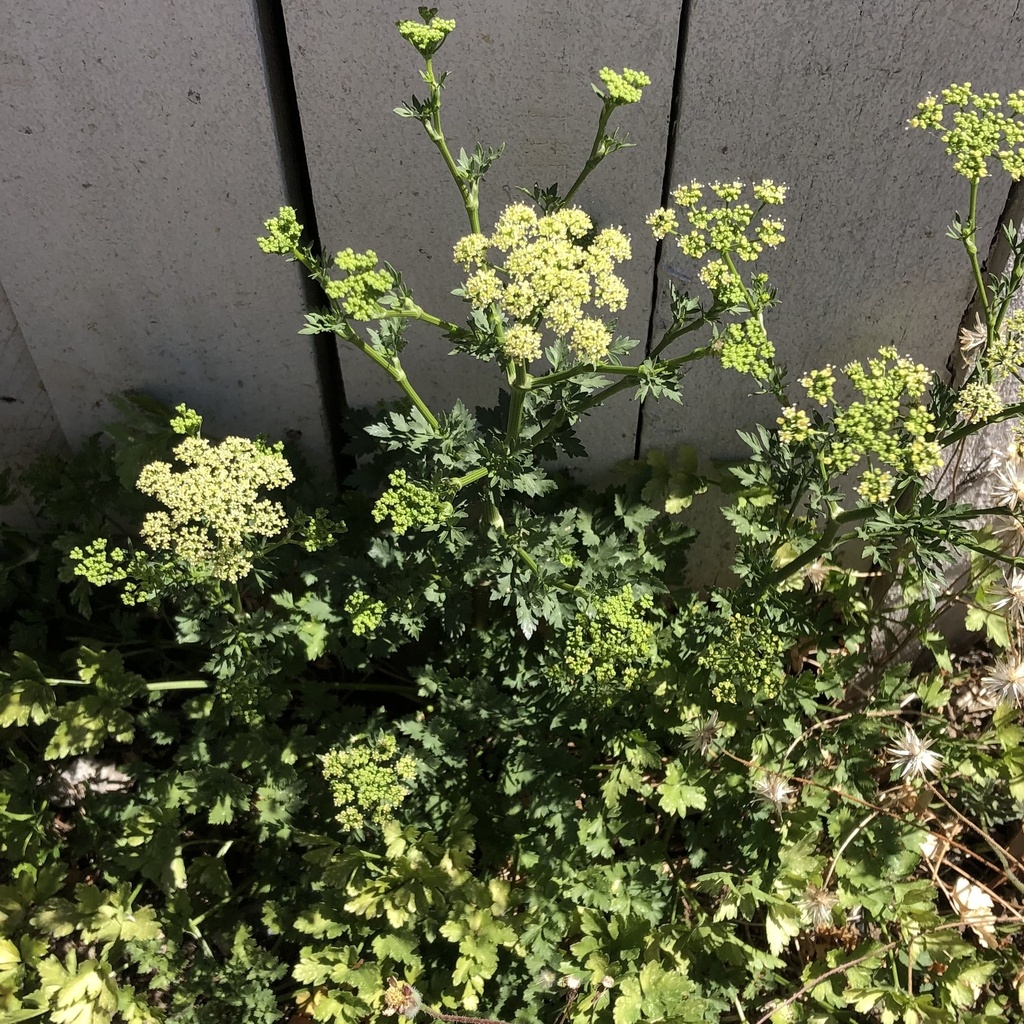
Overview
Parsley is the bright green garden herb on nearly every plate, and it is packed with vitamins K and C, iron and other minerals. It is often served as a garnish because it helps digestion and freshens the breath, even neutralising garlic breath. Medicinally its root, leaf and seed help keep water moving through the kidneys and bladder, and it is studied in my coursework as one of the classic diuretic herbs.
Plant family
Apiaceae
Parts used
Leaf, root and seed.
Actions
Diuretic · Aquaretic · Nutritive · Carminative · Emmenagogue · Antispasmodic · Expectorant
Affinities
Kidneys · Bladder
Body systems
Urinary · Digestive
Taste profile
Fresh, green, slightly bitter and aromatic.
Energetics
Warming and drying.
Traditional use
Parsley was traditionally used as a diuretic (an herb that helps you pass water) and bladder tonic for fluid retention and urinary complaints, as a carminative (an herb that eases gas) and gentle laxative, as an expectorant for coughs, to bring on delayed periods, and as a nourishing green for people recovering from illness. Home remedies use crushed parsley or parsley juice as a poultice or wash on bites, stings, bruises and small wounds, and daily parsley tea as a bladder tonic.
Current use
Germany's Commission E and Europe's EMA recognise parsley herb and root for flushing therapy, meaning increasing urine flow to rinse the urinary tract in mild urinary complaints and to help prevent kidney gravel (tiny stone-like deposits). Its effect is mostly aquaretic, meaning it increases water loss without much loss of salts. It is also a nourishing food herb and a gentle digestive aid.
Preparation
The fresh leaf is eaten freely as food or juiced. A leaf infusion (tea) is the gentlest medicinal form and suits daily use as a bladder tonic and digestive aid. The root, which is richer in diuretic compounds, is usually prepared as a decoction (simmered tea) or added to infusion formulas for flushing the urinary tract. The seed holds the most essential oil and is the strongest, most uterus-stimulating part, so it is best left to practitioners. Crushed fresh leaves make a simple poultice for bites, stings and bruises. I would recommend keeping medicinal teas moderate and short-term.
Dosage guidance
Enjoy it freely as food. Commission E / EMA: about 6 g of dried herb or root daily as a tea, taken with plenty of fluids, for short courses. Leave the seed and the essential oil to qualified practitioners.
Cautions & contraindications
Food amounts are safe. Please avoid medicinal amounts, the seeds and the essential oil during pregnancy. The seed oil contains apiole and myristicin; apiole can stimulate the uterus and, in large amounts, damages the liver and kidneys, which is why apiole extracts once used to end pregnancies caused fatal poisonings. Avoid it if you have kidney inflammation or kidney disease, or edema (swelling) from heart or kidney failure, because flushing therapy is not appropriate then. Parsley contains furanocoumarins (psoralens), which make the skin more sensitive to sunlight by reacting with skin cells under UV light, so large amounts or handling lots of the fresh plant in sun can cause rashes. Its high vitamin K can affect warfarin, so keep your intake consistent. Please never wild-harvest it: it closely resembles poisonous fool's parsley and hemlock.
Evidence notes
Winter's HERB302 notes (M7 - Diuretic Herbs) give only name, Latin and family plus course resource links. Web-sourced seed pending Winter's review. Sources: Plants For A Future (https://pfaf.org/user/Plant.aspx?LatinName=Petroselinum+crispum); Wikipedia: Parsley (https://en.wikipedia.org/wiki/Parsley)