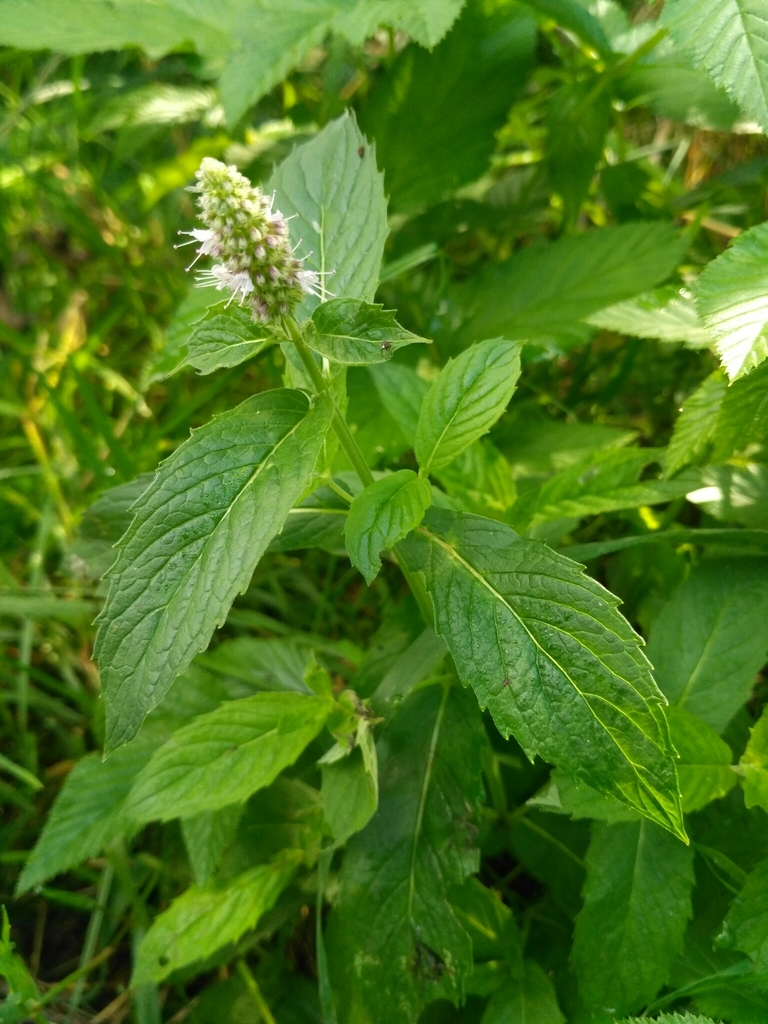
Overview
Peppermint is the cool, bright mint everyone knows, a natural hybrid of watermint and spearmint. It is one of the most useful and best-studied digestive herbs: cooling, relaxing to the gut, and good for gas, bloating and nausea. It also clears the head, lifts the mind and is easy to grow.
How it compares: Peppermint and spearmint are close relatives and can often stand in for each other in a tea, but they are not identical. Peppermint's oil is rich in menthol, which makes it stronger, more cooling, more antispasmodic and more pain-relieving: it is the better choice for cramping, IBS, tension headache and nausea, and only peppermint oil has strong clinical evidence for IBS. Spearmint has little menthol; its main compound is carvone, which makes it sweeter and gentler, better for children, for people whose reflux is aggravated by peppermint, and as a flavouring. Spearmint tea also has small studies suggesting it lowers androgens (male hormones) in women with PCOS, which peppermint does not share to the same degree. Pennyroyal is a mint too, but it is toxic (pulegone) and must never be used as a substitute.
Plant family
Lamiaceae (formerly Labiatae)
Parts used
Leaves and flowering tops; essential oil.
Actions
Carminative · Antispasmodic · Antiemetic · Aromatic · Diaphoretic · Analgesic · Nervine · Antimicrobial · Anti-inflammatory · Cholagogue · Stimulant
Affinities
stomach · intestines · head
Body systems
Digestive · Nervous
Taste profile
Pungent, strongly minty and cooling, slightly bitter.
Energetics
Cooling and drying, yet initially warming and stimulating.
Traditional use
The leaf tea has long been used after meals for flatulent indigestion and colic, for nausea of many kinds including motion sickness and pregnancy, and for headaches linked to digestion. Hot peppermint tea was taken to bring on a sweat in fevers, colds and flu, often blended with elderflower and yarrow. It was used for painful periods, and as a gentle relaxing nervine for anxiety and tension. Externally it soothed itching and inflamed skin and insect bites, and its scent was used to keep mosquitoes and other pests away. Herbalists also add it to formulas as a corrigent (an ingredient that improves the taste of other herbs) and to settle the gut.
Current use
As a tea, peppermint is a classic carminative (an herb that eases gas) and antispasmodic for indigestion, gas, bloating, intestinal cramping and nausea, and Europe's EMA and Germany's Commission E recognise the leaf for these uses. Enteric-coated peppermint oil (capsules coated to open in the intestine rather than the stomach) is recommended in an American College of Gastroenterology guideline to relieve IBS symptoms, and studies support it for abdominal pain. Diluted peppermint oil rubbed on the forehead and temples is as helpful as paracetamol for tension headaches in some trials, and inhaling it may ease nausea, including after surgery or during chemotherapy. Inhaled, it opens the nose and helps clear catarrh in colds. Small studies suggest the aroma improves alertness and memory.
Preparation
Infusion (tea) of the fresh or dried leaf and flowering tops, steeped covered so the oils don't escape; this is the everyday form for digestion, nausea, colds and nerves, and it combines well with chamomile, ginger, fennel or sage in digestive blends. Enteric-coated oil capsules are used for IBS. Diluted essential oil is rubbed on the temples for headache or on the belly for cramps, and used in steam inhalations and diffusers for congestion and nausea. A strong cooled infusion makes a wash for itchy skin.
Dosage guidance
Tea: 1-2 teaspoons (1.5-3 g) of dried leaf per cup, up to three or four cups a day (EMA). Enteric-coated oil capsules: as directed on the label, typically 0.2-0.4 mL oil up to three times a day. Essential oil on skin: dilute to about 2-5% in a carrier oil for adults; never on infants' faces.
Cautions & contraindications
Peppermint relaxes the muscle at the top of the stomach, so tea or oil can worsen heartburn and reflux (GERD) or a hiatal hernia. Oil capsules can cause heartburn, nausea or anal burning; avoid them with gallstones or bile-duct problems unless your doctor agrees. Please never apply peppermint oil to the face or chest of infants and young children: menthol can trigger a reflex spasm of the voice box and stop their breathing. The undiluted oil irritates skin and eyes, and large doses of the oil are toxic. Tea in normal amounts is fine in pregnancy; medicinal oil doses are not well studied. Enteric-coated capsules shouldn't be taken with antacids, which can dissolve the coating early. It may interact with some medicines, including cyclosporine, so please check with your provider.
Evidence notes
HERB303 page holds only name and family.
Web-sourced seed pending Winter's review. Sources: NCCIH Peppermint Oil (https://www.nccih.nih.gov/health/peppermint-oil); Plants For A Future (https://pfaf.org/user/Plant.aspx?LatinName=Mentha+x+piperita)