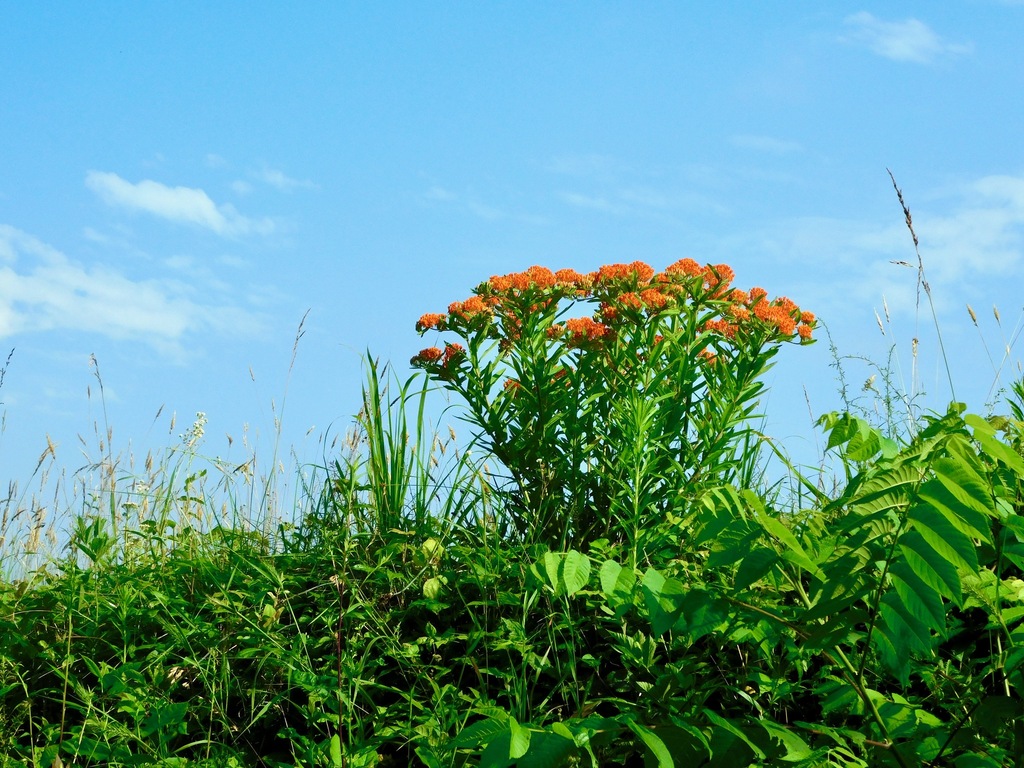
Overview
Pleurisy root, also called butterfly weed, is a long-lived cousin of milkweed with brilliant orange flowers that butterflies adore. This sweet, moistening root was one of the most important remedies of 19th-century American herbalism for the lungs, chest and fevers. It is a strong herb with heart-active compounds, so it calls for careful, measured use under guidance.
Plant family
Asclepiadaceae
Parts used
Root, gathered in fall or early spring.
Actions
Diaphoretic · Expectorant · Antispasmodic · Anodyne · Diuretic · Tonic · Cathartic · Emetic · Carminative · Pectoral
Affinities
Lungs and pleura · Skin · Synovial membranes and joints
Body systems
Respiratory · Musculoskeletal · Integumentary
Taste profile
Slightly sweet, salty and minerally; the dried root is bitterish and somewhat acrid (sharp), with a slight aroma.
Energetics
Moistening and lubricating; a nourishing tonic. Cooling in fevers through sweating.
Tissue states
Dry · Tense · Hot
Traditional use
Early colonial root doctors used it, and the 19th-century physiomedicalists prized it as a diaphoretic (an herb that helps you sweat) and moistener. Matthew Wood explains that it works in fevers by moistening membranes and opening the pores rather than by cooling directly, and he uses it for sharp, stitching chest pains left after bronchitis or pneumonia, a cough that is dry above and wet below, pneumonia with fluid in the lower lungs, acute and chronic bursitis and arthritis, and frozen shoulder. Old textbooks also list emphysema, indigestion, colic, diarrhoea, swelling and rashes (from the chewed root), worms and snakebite. Native peoples of eastern and mid-western America boiled and ate the young shoots, buds and pods much like asparagus.
Current use
Pleurisy root is used by herbalists to support the respiratory system through coughs, bronchitis, colds, flu and fevers, especially when the skin is dry and hot and the chest feels stuffy, and to help a sweat come through. It is also used for lingering chest pain after old bronchitis or pneumonia, for asthma with tight breathing, and for stiff, dry joints that crackle when they move. There are no clinical trials on it, and its use rests on tradition.
Preparation
A tincture of the fresh or dried root in 50% alcohol. A decoction (simmered tea) of the dried root is also traditional. In folk use the fresh root was chewed. The root takes a year or two to grow a deep taproot and is gathered in fall or early spring. The young shoots were cooked as a food, but please don't experiment with this without expert guidance, as other milkweed parts and look-alikes are toxic.
Dosage guidance
Tincture: 30 to 90 drops three times a day (HERB303 textbook). Please do not exceed this dose, and use it only short-term and with a qualified practitioner.
Cautions & contraindications
Please avoid pleurisy root during pregnancy (it may stimulate the uterus and has hormone-like activity) and breastfeeding, and don't give it to children. It contains cardiac glycosides (cardenolides, such as asclepin). These block the sodium-potassium pump in heart cells, which makes the heart beat more forcefully but, in excess, disturbs its rhythm and can cause heart failure; an overdose also causes nausea and vomiting. This is why it adds to the effect of digoxin and other heart medicines and of other cardiac-glycoside herbs (such as motherwort, and licorice, which lowers potassium). Diuretics (water pills) lower potassium, which makes the heart more sensitive to these glycosides, so don't combine them. It may also interfere with certain antidepressants and with hormone therapy. Please avoid it if you have any heart condition. The milky sap can damage the cornea of the eye.
Evidence notes
From Winter's HERB303 expectorant-herbs notes (HERB 303 textbook, citing Buhner, Sacred Plant Medicine) and Herb101 notes (Assignments, Dry/Atrophic Tissue State, Tissue States), citing Wood, The Practice of Traditional Western Herbalism.