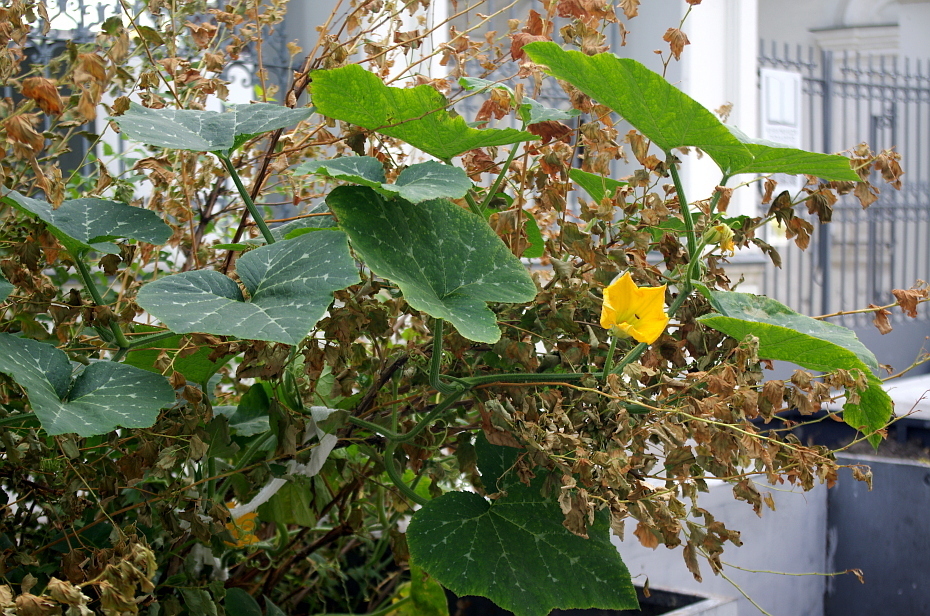
Overview
Pumpkin seeds are a nourishing food, rich in zinc, magnesium, calcium, potassium and silica, along with healthy fats, B vitamins and a well-balanced mix of amino acids. In herbalism they are best known as a traditional remedy for intestinal worms, and they are also valued for the bladder and prostate. They are gentle, safe and pleasant to take.
Plant family
Cucurbitaceae (noted as Cucurbiteae)
Parts used
Ripe seeds, as fresh as possible; seed oil.
Actions
Anthelmintic · Taenifuge · Antioxidant · Demulcent · Diuretic · Nutritive · Vulnerary
Body systems
Digestive · Urinary · Reproductive
Taste profile
Mild and nutty with a fresh herbal undertone; the infusion is full-bodied and soothing.
Energetics
Neutral to slightly cooling, moistening and nourishing.
Traditional use
Pumpkin seeds have been used for centuries, especially in the Americas, to expel parasitic worms, often followed by a laxative to clear them out. They were eaten as a nourishing food, and an emulsion of crushed seeds blended with milk or water was a classic home worm remedy. Home deworming recipes combine pumpkin seeds with papaya or pineapple and kefir, or with garlic and oregano.
Current use
Europe's EMA and Germany's Commission E recognise pumpkin seed for an irritable bladder and for urinary symptoms of an enlarged prostate (benign prostatic hyperplasia, BPH); clinical trials show modest relief of symptoms such as frequent night-time urination. An infusion of the seeds is used as a mild diuretic (helping you pass water) and urinary tonic for cystitis, fluid retention, and burning or scalding urine, and as a kidney and prostate tonic. The seeds are used to help expel roundworms and tapeworms, and have shown some effect in acute schistosomiasis (a parasitic infection). The seed oil is applied to minor burns.
Preparation
Emulsion: crushed seeds blended with milk or water and honey. Infusion: about 1 ounce of crushed seeds in 1 pint of just-boiled water, steeped 10-20 minutes, strained, and kept in the refrigerator for no more than 24 hours; it is cloudy, nutty and soothing. Seed oil, taken by the spoon or applied to the skin. Crushed seeds mixed with honey. For burns, an infused oil of crushed pepitas with calendula and lavender, or calendula and lavender infused into pumpkin seed oil, can be made. Use ripe seeds that are as fresh as possible.
Dosage guidance
For adults. Infusion: 4-6 tablespoons three times a day. Oil: up to about 1 tablespoon (10 g) once a day. For bladder complaints: the infusion plus a tablespoon of oil daily. For worms (traditional textbook formula): 4 ounces of seeds blended with 2 pints of milk or water, taken a half pint every two hours for six to eight hours on an empty stomach with no solid food, followed by 1 tablespoon of castor oil two hours after the last dose; or 1-2 tablespoons of crushed seeds with honey in three doses two hours apart. EMA for bladder/prostate: about 10 g of whole or coarsely ground seeds daily. Please confirm any worm infection with a doctor.
Cautions & contraindications
Pumpkin seeds are considered safe and non-toxic. Please don't give the worm emulsion formula to children (the castor oil purge is too strong for them). The topical oil is for minor burns only, never severe second- or third-degree burns; apply it with sterile gauze on broken skin. Pumpkin seed eases prostate symptoms but does not shrink the prostate, so please see a doctor to rule out other causes of urinary changes. Rare allergies occur.
Evidence notes
From Winter's HERB202 anthelmintics notes (an AI-generated summary of the course textbook) and HERB302 anthelmintic-herbs module page.