Overview
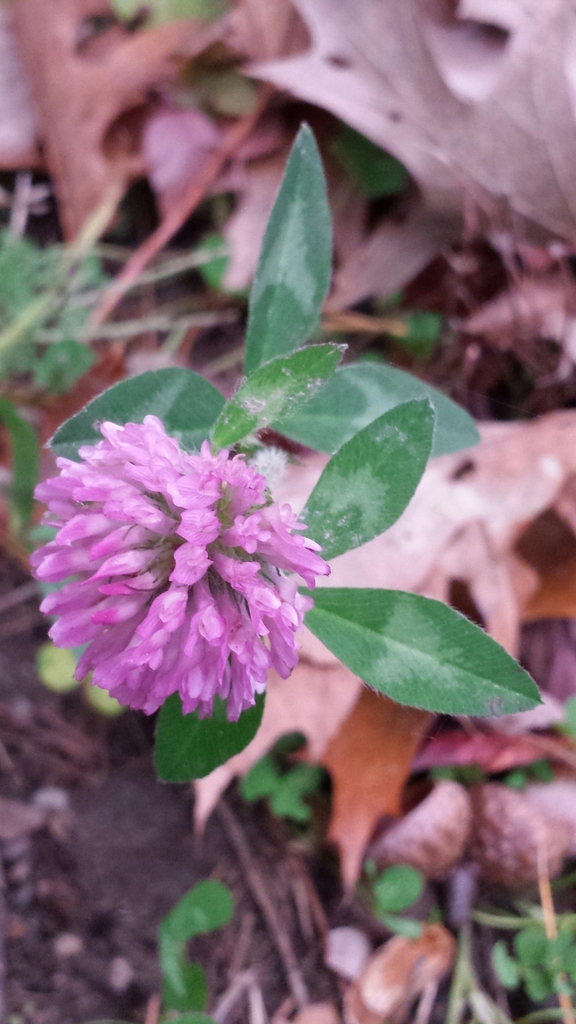
Red clover is a sweet, fruity-scented meadow legume (a member of the pea family) that enriches the soil it grows in by fixing nitrogen. Its fluffy pink-purple flowering tops have been valued in European, American and Asian traditions as a gentle alterative, meaning an herb that is thought to help the body clear waste and gradually restore healthy function. It is also a nourishing, mineral-rich plant and one of the best-studied sources of plant isoflavones, compounds that act a little like a very mild form of estrogen.
Plant family
Fabaceae
Parts used
Flowering tops (blossoms with the upper leaves).
Actions
Alterative · Lymphatic · Expectorant · Anti-catarrhal · Antispasmodic · Anti-inflammatory · Diuretic · Nutritive · Galactagogue · Phytoestrogenic · Antioxidant · Tonic · Astringent · Deobstruent
Affinities
Lymphatics · Blood · Skin · Respiratory tract · Liver
Body systems
Lymphatic · Integumentary · Respiratory · Reproductive
Taste profile
Dry, it tastes like hay, faintly sweet and slowly bitter. As an infusion, it is bittersweet, floral and lightly sour, with a sweet strawberry-jam aroma.
Energetics
Cooling and slightly moistening, according to traditional Western herbal references.
Traditional use
Red clover has a long reputation as a blood and lymphatic cleanser, used for skin conditions such as eczema, psoriasis, acne, slow-healing sores, burns and ulcers. Herbalists have also prized it for any condition with excess mucus: bronchial congestion, coughs, wheezing and whooping cough, and as a gentle respiratory tonic for children. Chinese tradition used the infusion as an expectorant (to help loosen and clear mucus), Russian herbalists used it for bronchial asthma, Native Americans used it for sore eyes, burns and as food, and Europeans turned to it for liver and digestive complaints and fluid retention. It was also given for nervousness, poor milk supply in nursing mothers, anemia and menopausal changes. On the skin, the fresh juice was applied as a soothing, antiseptic wash that also helps slow minor bleeding.
Current use
Modern interest in red clover centres on its isoflavones (biochanin A, formononetin, genistein and daidzein), which can attach to the body's estrogen receptors. Because they can switch a receptor gently on in some tissues and dampen it in others, researchers describe them as selective estrogen receptor modulators. Several small trials of a standardized isoflavone extract (around 80 mg isoflavones a day) found fewer hot flashes in postmenopausal women and less vaginal dryness, but a larger trial of about 250 women found no clinically meaningful reduction in hot flashes, only a weak biological effect, so the overall evidence is mixed. In the laboratory, an isoflavone from red clover applied to the skin of hairless mice after UV exposure reduced UV-induced skin damage and tumour formation, which has prompted interest in it as a topical sun-protective ingredient; this has not been confirmed in people. Recent analysis has also identified around twenty flavonoid compounds in the flowers, with flavones dominating in the flowers and isoflavones in the leaves. Red clover is not a proven treatment for any of these conditions, and it is not a substitute for medical hormone therapy.
Preparation
The flowering tops (blossoms with their upper leaves) are the part used. They are gathered when the flowers are at their peak, handled gently so they don't bruise, and dried quickly so they keep their colour; flowers that turn brown have lost quality. Red clover is most often prepared as an infusion (a tea steeped in just-boiled water, covered, for about 15 minutes); the blossoms are very light and float, so stir them under. It can also be made into a syrup, a tonic, capsules, a poultice for the skin, or blended into an alterative formula with roots such as yellow dock and burdock. Its sweet, jam-like aroma suggests it would make a lovely cordial. Commercial isoflavone extracts are a different, concentrated product made mostly from the leaves, where isoflavones are richest; the gentle tea of the blossoms is the traditional form.
Dosage guidance
Infusion: typically 1 to 2 teaspoons (about 1 to 3 g) of dried flowering tops per cup of boiling water, steeped covered for 10 to 15 minutes, up to three cups a day. Standardized isoflavone extracts studied for menopause supplied about 40 to 80 mg of isoflavones daily. Please follow product labels and a practitioner's advice, and don't combine extracts with hormone therapy without medical guidance.
Cautions & contraindications
Because red clover's isoflavones can act on estrogen receptors, please avoid concentrated red clover during pregnancy and breastfeeding, and talk to your doctor first if you have, or have had, a hormone-sensitive condition such as breast, uterine or ovarian cancer, endometriosis or fibroids, or if you take tamoxifen, hormone therapy or birth control. Red clover contains small amounts of coumarin-type compounds, and some references advise caution with blood thinners (such as warfarin) and before surgery, since a theoretical additive effect on bleeding has been raised, although tea-strength use has not been shown to thin the blood. Please stop using it about two weeks before planned surgery. It is generally well tolerated; mild side effects can include headache, nausea or rash.
Evidence notes
From Winter's HERB202 notes (cultivation, actions, organoleptic study) and Herb101 T7 herbal exploration, citing Gladstar, Rosemary Gladstar's Medicinal Herbs: A Beginner's Guide, and Schulman, Benefits of Red Clover Extract (HerbalGram). HERB302 page holds family and resource links only.