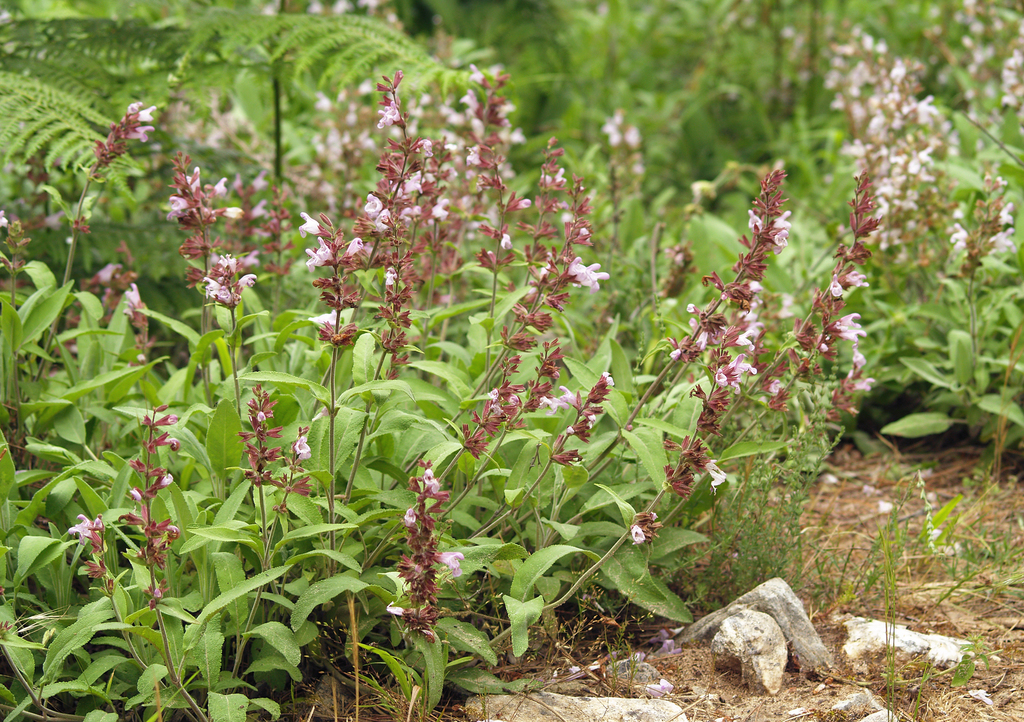
Overview
Garden sage is a warming, oily, gently astringent kitchen herb with a remarkable range. Its great gift is balancing the body's fluids: it is used to hold back excess sweating, saliva, milk and other losses, while nourishing tissues that have become dry and withered. It is the classic gargle for the mouth and throat, a friend to digestion of rich foods, and a long-standing support for women through menopause.
Plant family
Lamiaceae (formerly Labiatae)
Parts used
Leaf
Actions
Astringent · Antihydrotic · Diaphoretic · Antiseptic · Antimicrobial · Anti-inflammatory · Antispasmodic · Carminative · Cholagogue · Galactofuge · Bitter · Tonic · Stimulant
Affinities
Skin · Mucous membranes · Kidneys · Endocrine system · Mouth and throat · Veins
Body systems
Integumentary · Respiratory · Digestive · Urinary · Endocrine · Reproductive · Cardiovascular · Nervous
Taste profile
Pungent, warm, oily, bitter and astringent.
Energetics
Warming and moistening, yet astringent (tightening and toning to tissues).
Tissue states
Relaxed · Atrophy · Depressed
Traditional use
In traditional Western herbalism, sage 'balances fluids of all kinds', as one naturopath put it. It was used to check drenching sweats (as in tuberculosis and menopause), excessive urination, chronic diarrhea and heavy menstruation, yet also to moisten and rebuild dried-out skin, hair, mucous membranes and especially tendons in older people. It was used to help digest fats, as a bitter tonic for the liver and gallbladder, and to rebuild strength during long illness. Herbalists gave it for colds, flu and coughs that begin with a dry, sore throat, for sinus drip, for low mood, mental dullness and poor concentration, for irregular or absent menstruation, infertility, vaginal dryness and leukorrhea (vaginal discharge), and for night emissions and premature ejaculation in men. Folk healers such as Eva Graf used it for sluggish, varicose veins and stagnant blood, and Hildegard von Bingen gave it cooked in wine for coughs. Externally it was used as a poultice for insect bites, wounds and minor bleeding, and the leaf was laid on an aching tooth. It was also used to darken greying hair and for dandruff.
Current use
Sage is approved in Europe (Commission E and the EU herbal monograph) as a traditional remedy for inflammation of the mouth and throat, mild digestive complaints such as heartburn and bloating, and excessive sweating. Clinical studies support it for hot flashes and night sweats in menopause, and early trials suggest it may support memory and attention. It is widely used as a gargle, spray or mouthwash for sore throats, tonsillitis, laryngitis, sore or bleeding gums and canker sores, and its drying effect makes it a natural deodorant ingredient. Sage tea is also a well-known way to gently reduce breast milk when a nursing parent is ready to wean, and it has been used to reduce excessive drooling in Parkinson's disease. Some studies suggest modest benefits for cholesterol and blood sugar, but these need more research.
Preparation
The leaf is used, best harvested before the plant flowers and dried in the shade. Sage tea should be steeped in a covered pot so the aromatic oils stay in the cup. It is a two-way remedy: drunk hot, it encourages a cleansing sweat that helps chase off a chill; drunk cool or cold, it helps reduce sweating and other discharges. Honey makes it pleasant, and it blends well with mint, rosemary or lemon balm as a warming, calming drink. It can be made into a gargle, mouthwash or throat spray, a tincture (alcohol extract) taken in small doses, a bath, a hair rinse, or a poultice. Fresh leaves cooked with rich, fatty meals aid digestion, which is why sage is traditional in stuffings. For a more stimulating, warmer and less astringent effect, some herbalists substitute California white sage (Salvia apiana).
Dosage guidance
Tea: 1 to 3 g of dried leaf (about 1 to 2 teaspoons) per cup, steeped covered for 10 minutes, up to three times daily; David Hoffmann recommends no more than 15 g of leaf per dose. Gargle: a strong infusion (about 2.5 g per 100 mL) several times a day. About one cup of tea or more daily is enough to reduce breast milk substantially. Tincture: small doses as advised by a practitioner. Please limit continuous medicinal use to a few weeks unless a practitioner advises otherwise.
Cautions & contraindications
Please avoid medicinal amounts of sage while breastfeeding unless your aim is to reduce your milk supply. Please don't use it in medicinal amounts during pregnancy or if you have epilepsy or a seizure disorder. Sage contains thujone. Thujone blocks the GABA-A receptor, the brain's main 'calming' switch, so nerve cells become over-excitable, and in high doses this can cause restlessness, dizziness, vomiting and convulsions. The amount in a normal cup of tea or in cooking is small, but the plant is considered toxic in excess or with long-term high-dose use, and the essential oil is far more concentrated: please never take sage oil internally. Sage may cause indigestion in some people. It may lower blood sugar, so diabetics on medication should monitor closely. Matthew Wood notes it is not suited when night sweats follow a hectic fever with dry, harsh skin.
Evidence notes
From Winter's Herb101 notes (Assignments and Tissue States sections), citing Wood, The Practice of Traditional Western Herbalism, and Gladstar, Medicinal Herbs: A Beginner's Guide, with additional notes from Plants for a Future (pfaf.org) mentioning German Commission E approval for loss of appetite, mouth inflammation and excessive sweating. HERB303 page is a course resource template only.