Overview
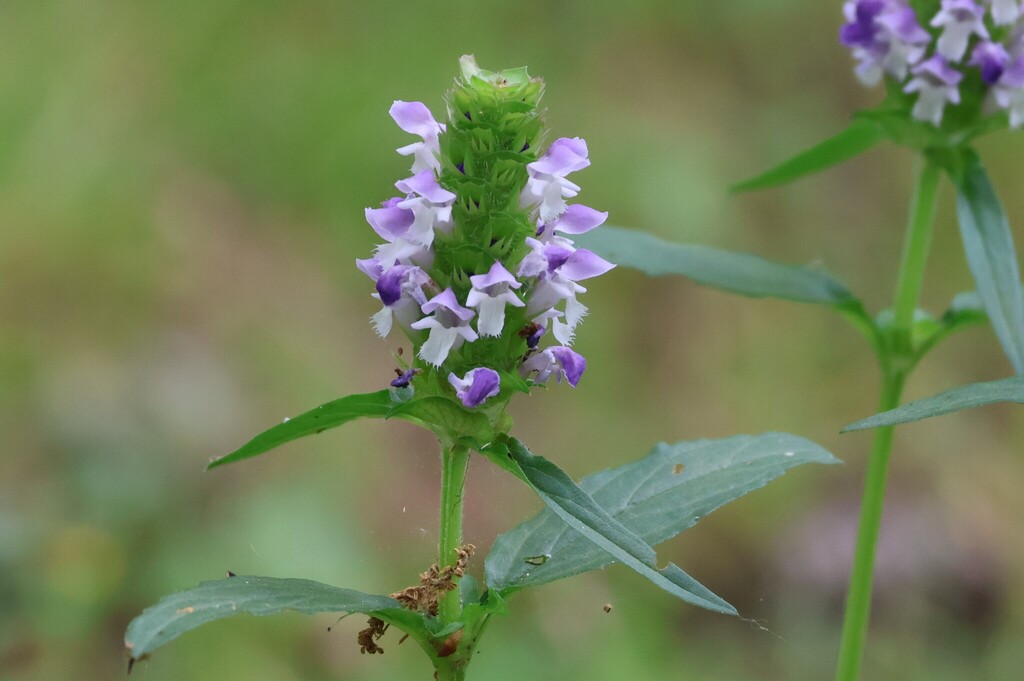
Self-heal is a low, cheerful mint-family plant with purple flower heads that grows in lawns and meadows the world over, about as common as plantain and dandelion. True to its name, it has been a beloved wound herb since antiquity. It is gentle, cooling and wonderfully versatile, from cuts and bleeding to sore throats.
Plant family
Lamiaceae
Parts used
Aerial parts (leaf and flowering tops); flower spikes in Chinese medicine.
Actions
Vulnerary · Astringent · Styptic · Anti-inflammatory · Antiviral · Antimicrobial · Antioxidant · Alterative · Tonic · Hypotensive · Febrifuge
Affinities
Skin · Throat and mouth · Liver
Body systems
Integumentary · Respiratory · Digestive · Immune
Taste profile
Somewhat bitter, mildly aromatic, slightly salty.
Energetics
Cooling and dispersing.
Tissue states
Hot · Relaxed
Traditional use
Fresh self-heal leaves have been laid on cuts, abrasions and bleeding gashes as poultices and compresses since ancient times. Its name Prunella may come from its old use for throat inflammation ('die Bräune'), and it was gargled, often with honey, for sore throats. It was taken internally for mild internal bleeding, diarrhea and bleeding hemorrhoids (applied as an ointment or lotion), for fevers and a sore mouth, and applied to ulcers, insect bites, abscesses, boils and burns. Folk herbalists also used it for high blood pressure, allergies and upper respiratory infections. In East Asian practice it was used for swellings of the neck (swollen lymph nodes and goitre), red, painful eyes and heat-related headaches.
Current use
Self-heal is used as a tea, gargle and wash to comfort a sore mouth and throat and to calm minor skin irritations and wounds. Laboratory studies show antiviral activity (including against herpes simplex viruses), plus antimicrobial, antioxidant and anti-inflammatory effects, largely linked to its rosmarinic acid, triterpenes (ursolic acid) and polysaccharides. Studies also suggest its extracts can help protect skin cells from UV damage. In Chinese medicine the flower spikes are still widely prescribed for swollen glands, eye inflammation and raised blood pressure. Human clinical evidence is limited.
Preparation
The above-ground parts (leaves and flowering tops) are used, gathered while in flower; Chinese medicine favours the dried, ripe flower spikes. It is prepared as an infusion (tea), a gargle sweetened with honey, an eye or skin wash, a tincture, an ointment or lotion (for hemorrhoids and skin), or a fresh-leaf poultice or dried powder on wounds. Use the fresh leaf for immediate first aid on cuts, and the dried flowering tops for teas and gargles.
Dosage guidance
Tea: 1 to 2 teaspoons of dried herb per cup of just-boiled water, steeped 10 to 15 minutes, one cup two to three times a day. In Chinese practice, 9 to 15 g of dried spikes daily in decoction. Please follow a practitioner's advice for longer use.
Cautions & contraindications
Self-heal is generally considered safe in normal amounts. Mild stomach upset or allergic reactions are possible, particularly in people sensitive to mint-family plants. Because it may lower blood pressure and blood sugar a little, please check with your doctor if you take medicines for these. Please consult a practitioner before using it during pregnancy or breastfeeding, since its safety is not well studied. Large wounds, deep cuts and wounds showing infection need medical care.
Evidence notes
From Winter's HERB303 notes (M7 - Antiseptic & Hepatic Herbs); page holds only the course template. Web-sourced seed pending Winter's review. Sources: Plants For A Future (https://pfaf.org/user/Plant.aspx?LatinName=Prunella+vulgaris); Christopher Hobbs Herbal Therapeutics Database, Self-heal (https://christopherhobbs.com/herbal-therapeutics-database/herb/self-heal/)