Overview
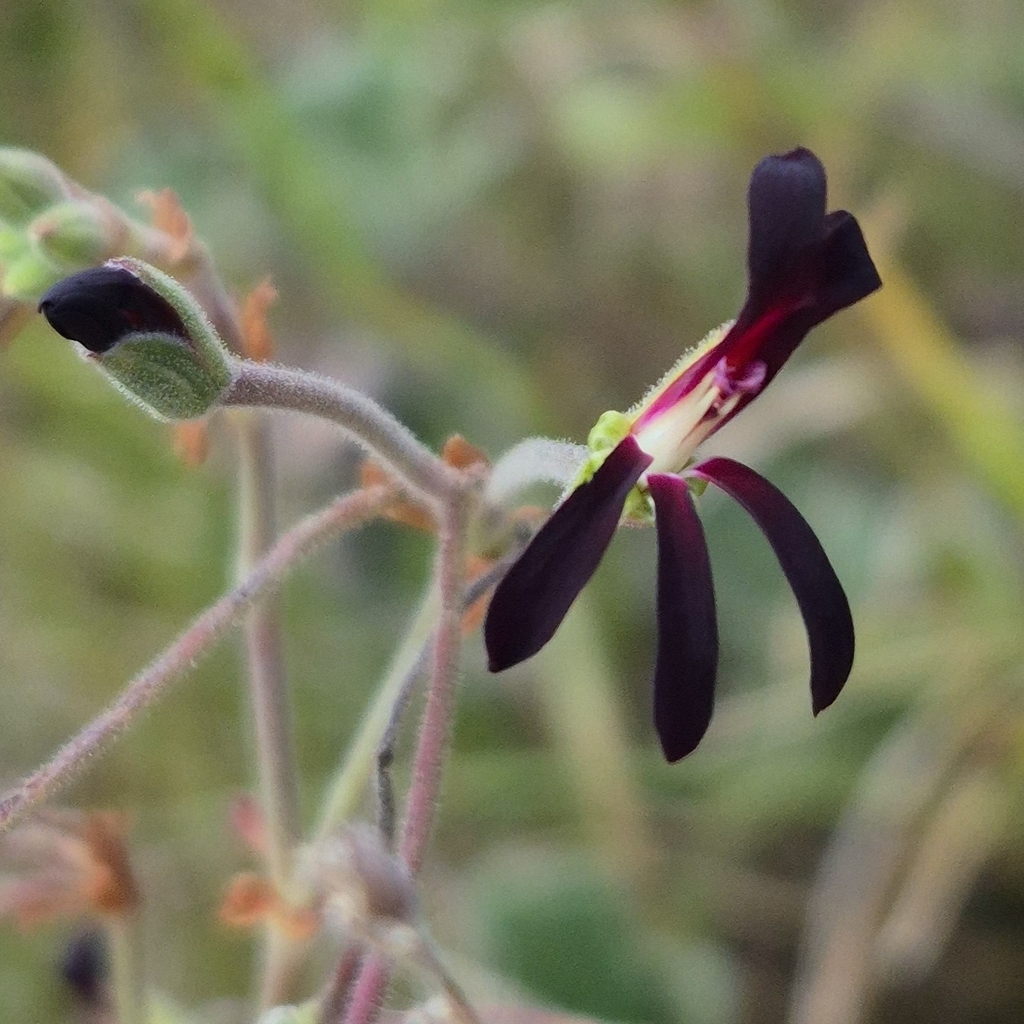
Pelargonium sidoides is a small South African geranium with silvery, heart-shaped leaves and dark, wine-coloured flowers. Its tuberous red root has a long traditional history, and today it is one of the best-studied herbal remedies for colds, sore throats and chesty coughs. It is a modern herb with deep roots.
Plant family
Geraniaceae
Parts used
Root, taken as an extract.
Actions
Immune modulator · Antibacterial · Antiviral · Anti-adhesive · Antitussive · Expectorant · Anti-inflammatory · Astringent
Affinities
upper respiratory tract · bronchi
Body systems
Respiratory · Immune
Taste profile
Astringent and slightly bitter.
Traditional use
In southern Africa, healers of the Zulu, Xhosa, Basotho and Mfengi peoples used the root for coughs, chest complaints and tuberculosis, and for dysentery and diarrhea. The remedy reached Europe in the early 1900s, when it was marketed as a tuberculosis cure; it was later developed in Germany into the modern respiratory extract.
Current use
The root extract (best known as EPs 7630, sold as Umckaloabo) has several double-blind, placebo-controlled trials behind it. In adults and children with acute bronchitis, tonsillitis and other upper respiratory infections it significantly reduced cough, chest pain, breathlessness and hoarseness; in one bronchitis study, 77 percent of the treated group had recovered fully by day seven versus 11 percent on placebo. A phase III trial in adults with the common cold showed a significant reduction in symptoms, and another trial found it more effective than placebo for acute sinusitis thought to be bacterial. In children aged 6 to 10 with acute tonsillopharyngitis, the extract succeeded in 87.5 percent of cases versus 40 percent on placebo over six days. A small trial in infants with an immune-protein deficiency (transient hypogammaglobulinemia of infancy) and recurring infections found less nasal congestion and cough. In lab and animal studies it has shown activity against influenza, against bacteria such as Strep. pneumoniae, Haemophilus influenzae and Staph. epidermidis, an ability to stop H. pylori bacteria sticking to stomach tissue, and a cough-calming effect in guinea pigs. It seems to work by helping the immune system (boosting interferon and the activity of immune cells) and by stopping microbes from attaching to the lining of the airways, rather than by killing them outright. European regulators accept it as a traditional remedy for the common cold. Claims for HIV and other serious infections are not supported by solid evidence.
Preparation
The root is the medicinal part, harvested from plants several years old. It is used as a standardized liquid extract (drops or syrup) or tablets, typically taken at the first sign of a cold or cough and continued for a few days after symptoms ease. Wild harvesting has put pressure on natural populations, so cultivated, sustainably sourced products are best.
Dosage guidance
Please use a commercial root extract according to its label. Typical adult doses of EPs 7630 in trials were 30 drops (about 1.5 mL) three times daily, or one 20 mg tablet three times daily, for up to 7 to 14 days. Please see a doctor if symptoms worsen, include high fever, breathlessness or bloody sputum, or last more than a week.
Cautions & contraindications
European regulators list liver injury (hepatitis and raised liver enzymes) among its rare reported side effects; the mechanism is not known. Please don't use it if you have liver disease, and stop and see a doctor if you notice yellowing of the skin or eyes, dark urine, pale stools or upper abdominal pain. Since 2024 the EU no longer considers it established as safe in children under 6, because their liver metabolism is still maturing. Other possible side effects include stomach upset, diarrhea, nosebleeds or gum bleeding, and allergic skin reactions. The root contains coumarins, and an interaction with blood thinners such as warfarin cannot be ruled out, so please check with your doctor if you take anticoagulants. Please avoid it during pregnancy and breastfeeding, as safety has not been established.
Evidence notes
Winter's HERB303 page holds only the name, Latin name and family plus research links.
Web-sourced seed pending Winter's review. Sources: MSKCC About Herbs: Pelargonium sidoides (https://www.mskcc.org/cancer-care/integrative-medicine/herbs/pelargonium-sidoides)