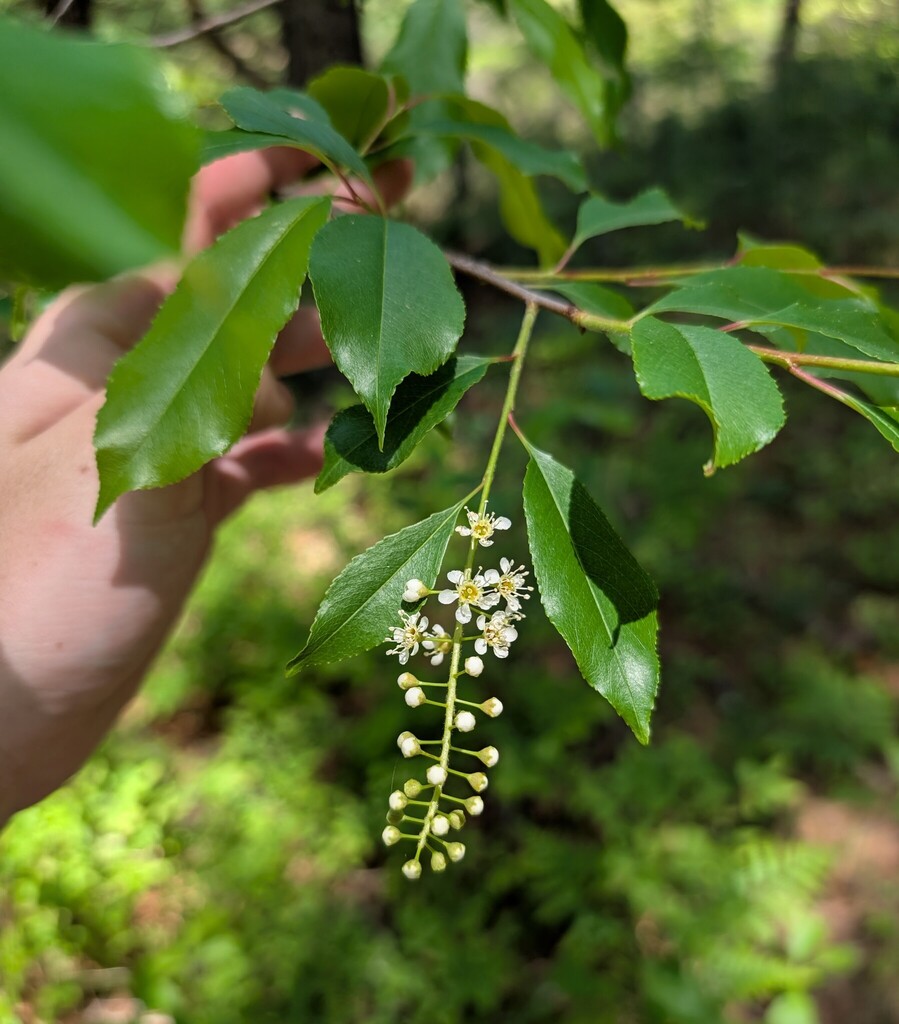
Overview
Wild cherry is a native North American tree whose inner bark has been a mainstay of cough syrups for generations. It is used to calm and quiet irritable, spasmodic coughs and to support the lungs through colds. Because it naturally contains a cyanogenic compound (one that can release cyanide), it is used in small doses and short-term only.
Plant family
Rosaceae
Parts used
Inner stem bark.
Actions
Antitussive · Expectorant · Astringent · Sedative · Antispasmodic · Bitter
Affinities
Lungs and respiratory tract
Body systems
Respiratory · Digestive
Taste profile
Bitter and astringent, with a faint almond-like aroma.
Energetics
Cooling and astringent; relaxing (classified with the cooling, sedating Rose-family remedies).
Traditional use
Native North American peoples and later Eclectic physicians used the bark for coughs, whooping cough, bronchitis and other lung problems, for diarrhea and digestive upsets, and as a calming tonic for a nervous, irritable heart and stomach. It was also used for gout and pain, and cherries have long been fermented into cordials and spirits.
Current use
Wild cherry bark is used in cough syrups and lozenges for irritable, dry or persistent coughs, bronchitis and the cough of colds, and to soothe sore throats and feverish colds. Its antitussive (cough-quieting), mildly sedative and astringent effects come mainly from small amounts of prunasin and from tannins. In my studies it is described as a relaxant for wheezing and coughing. Laboratory studies have looked at anthocyanins and other compounds in cherries for anti-inflammatory and anti-cancer activity, but these are early, mostly test-tube findings, not evidence for treatment.
Preparation
The inner stem bark is used, dried. It is best prepared with cool or warm, not boiling, water, as a cold infusion, or as a syrup, tincture or liquid extract, because heat drives off the volatile compounds thought to quiet a cough. Bark gathered in autumn yields roughly three times more of the cyanide-releasing compound than bark gathered in spring, so spring bark and careful drying are preferred. It is commonly combined in cough syrups with expectorants such as elecampane, licorice or mullein.
Dosage guidance
My course notes give 5 to 12 drops of liquid extract in water, two to three times a day. Short-term only (a few days to a week or two), and please do not exceed the recommended dose. Not for children without a practitioner's guidance.
Cautions & contraindications
Not for long-term use or large amounts; very large amounts can be fatally poisonous. The bark (and much more so the leaves, seeds and wilted leaves) contains prunasin, which is broken down into hydrogen cyanide; cyanide blocks the enzyme cells use to burn oxygen, so even with plenty of oxygen in the blood the body's cells cannot use it, which in poisoning causes headache, dizziness, rapid breathing, collapse and potentially death. Please avoid it in pregnancy, because prunasin may harm the developing baby, and during breastfeeding. Early laboratory evidence suggests it may slow the liver enzyme CYP3A4, which breaks down many medicines (such as some statins, antifungals, fexofenadine and triazolam), so please use caution or avoid it if you take these. Never let children or animals chew the leaves, twigs or seeds. AHPA safety Class 2d (not for long-term use; do not exceed the recommended dose).
Evidence notes
From Winter's HERB304 notes (monograph M5 P-T), citing Gruenwald et al., PDR for Herbal Medicines; Leung & Foster; Brinker; and the AHPA Botanical Safety Handbook.