Overview
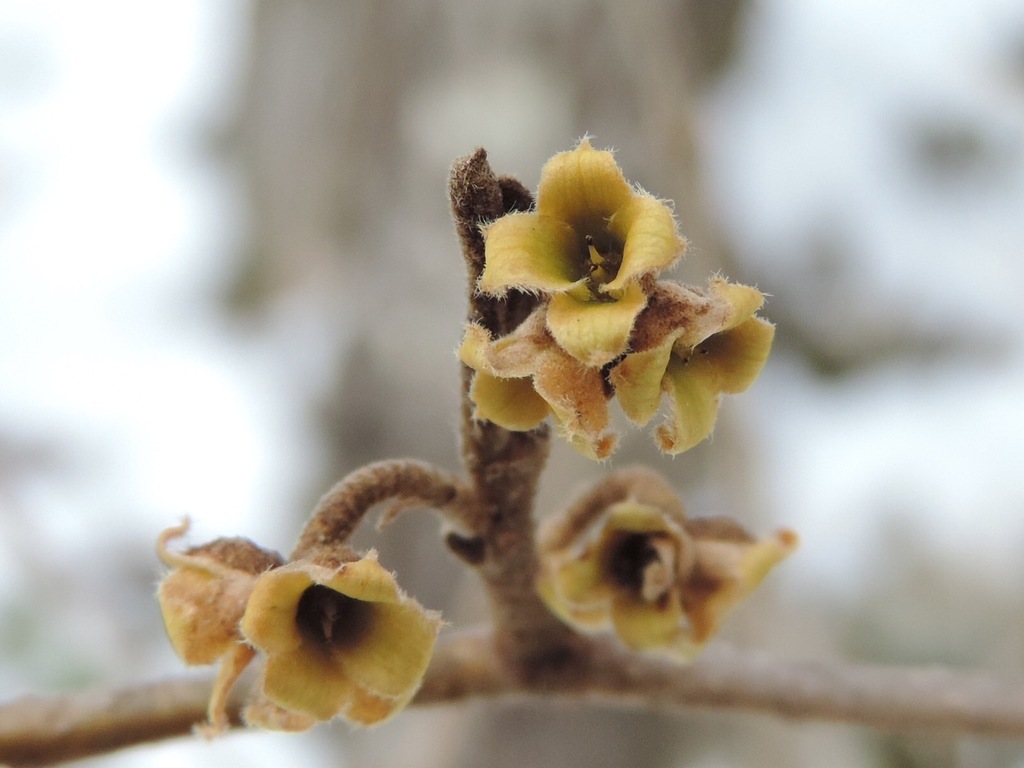
Witch hazel is a North American shrub that blooms with golden, thread-like flowers in late autumn, just as last year's seed capsules snap open and fling their seeds. It is a classic astringent, meaning it tightens and tones tissue, thanks to its rich tannins. It is used mostly on the skin, to tone and soothe irritation, minor scrapes and bruises, and tired, swollen veins.
Plant family
Hamamelidaceae
Parts used
Leaves, bark and twigs; fresh leaves and twigs are gathered in spring and early summer for the distillate.
Actions
Astringent · Anti-inflammatory · Styptic · Hemostatic · Vasoconstrictor · Vulnerary · Antioxidant · Antiviral · Tonic · Analgesic
Affinities
Skin · Mucous membranes · Veins
Body systems
Integumentary · Cardiovascular · Digestive
Taste profile
Astringent (strongly puckering) and slightly bitter; the leaf tea is nearly odorless.
Energetics
Cooling and drying; toning.
Traditional use
Native Americans used witch hazel for skin sores and ulcers, made strong teas for coughs, colds and dysentery, used decoctions to keep the legs limber and ease a lame back, and placed it on hot stones in sweat lodges to soothe sore muscles. Colonists used it for insect bites and stings, hemorrhoids, diarrhea and dysentery, and to check bleeding inside and out. Other traditional uses include eye inflammation, nosebleeds, heavy menstruation and painful periods. Its forked branches were used as dowsing rods for water and metals.
Current use
Witch hazel is one of the few American medicinal plants still approved by the FDA as an over-the-counter ingredient: as an astringent, a skin protectant and for the symptomatic relief of hemorrhoids. Germany's Commission E and the WHO monograph support it topically for minor skin injuries, bruises and sprains, local inflammation of the skin and mouth, hemorrhoids and varicose veins, and the bark and leaf internally for mild diarrhea. Studies show a vasoconstricting (vessel-tightening) and mild anti-inflammatory effect on the skin, and a proanthocyanidin-rich fraction showed antiviral activity against the cold-sore virus (herpes simplex 1) in the lab.
Preparation
The leaves, bark and twigs are used, and the choice of part and method matters. Leaves and bark are highest in tannins, so a decoction of bark (or infusion of leaf) is the strongly astringent preparation, used for compresses, washes, gargles for the gums and mouth, and, in small amounts, for diarrhea. Witch hazel water (the familiar drugstore distillate) is steam-distilled from fresh leaves and twigs gathered in spring and early summer; distillation leaves the tannins behind, so it is a gentler, cooling astringent best for the face, razor burn and everyday skin care. It is also made into ointments, pads, suppositories, extracts and toners. When I tasted the leaf infusion in class, a short steep was mild and lightly puckering, and a longer steep was noticeably more tightening.
Dosage guidance
Following the WHO monograph, for external use: witch hazel water undiluted or diluted 1 part to 3 parts water for compresses; a decoction of 5 to 10 g of leaf or bark in 1 cup (250 mL) of water for compresses and rinsing wounds; ointments several times a day; suppositories one to three times a day. Internally (leaf or bark tea for mild diarrhea), Commission E describes 2 to 3 g of leaf or bark per cup, up to three times a day, short-term.
Cautions & contraindications
Witch hazel is very safe on the skin, though occasional contact allergy occurs. Taken internally in large amounts, its tannins can irritate the stomach, cause nausea or constipation, and with heavy long-term use may stress the liver, so internal use should be modest and short. Commercial witch hazel water usually contains about 14% alcohol and is for external use only. Please don't use it on deep or heavily bleeding wounds in place of medical care. Safety in pregnancy and breastfeeding has not been established for internal use; external use is generally considered fine.
Evidence notes
From Winter's Herb101 monograph comparison chart (Steven Foster monograph, ONU Medicinal Herb Gardens, WHO monograph; citing Commission E, ESCOP, Korting et al. 1993) and HERB302 Astringent Herbs module page (Latin name and family).