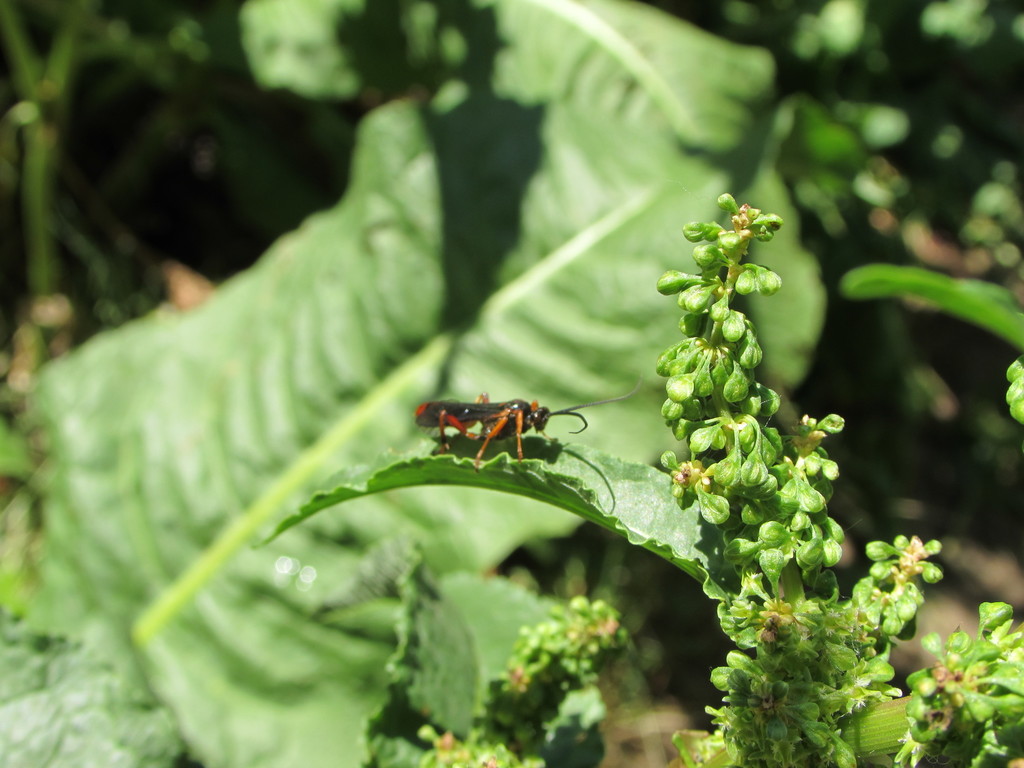
Overview
Yellow dock, also called curly dock, is a hardy wayside plant with wavy-edged leaves whose tough yellow-tan root carries a sour, bitter and mucilaginous character. It is a classic alterative in Western herbalism, meaning an herb that gradually helps restore healthy function, especially through better digestion, elimination and clearer skin. It is cooling and gently laxative, and it has a long reputation as a friend to the blood and to iron levels.
Plant family
Polygonaceae
Parts used
Root (main medicine); young leaves as a food and poultice.
Actions
Alterative · Laxative · Astringent · Bitter · Cholagogue · Depurative · Hepatic · Tonic
Affinities
Gastrointestinal tract · Skin
Body systems
Digestive · Integumentary
Taste profile
The root is sour, bitter, astringent and faintly sweet, with a mucilaginous, slightly 'moldy' note; the leaves are sour and astringent.
Energetics
Cool and damp.
Tissue states
Hot · Relaxed · Stagnant
Traditional use
In traditional Western herbalism it is a remedy for heat and irritation combined with relaxed tissue and mild congestion. Matthew Wood lists menstrual irregularity with anemia in young women around puberty, an irritable cough worse in cold air, swollen dark-red throats with little pain, sores and ulcers in the mouth, offensive breath and sweat, slow digestion, lower-back pain from constipation, morning diarrhea in the elderly, infants and nursing mothers, bleeding, itching hemorrhoids with poor elimination, and red, corrosive skin. European herbalists used it as a spring cleanser and blood purifier, and the young leaves were eaten as a sour potherb.
Current use
Yellow dock root is used traditionally to support slow digestion and sluggish bowels (food that sits 'like a brick'), as a gentle laxative and antacid, and to support the skin, especially red, damp, irritated or weepy skin conditions. Its mild anthraquinone content (much lower than in turkey rhubarb or senna) gives it a gentle laxative effect, and its bitterness stimulates bile flow. It is a popular folk remedy for iron-deficiency anemia, partly because it is said to help the body use iron; there is little research on this, so please treat anemia with your doctor. It is also used for mouth and throat irritation and thrush-like white coatings.
Preparation
The root is the main medicine, and the leaves are a different, milder tool. The root is usually prepared as a decoction (simmered), though my textbook notes an infusion is suitable, or as a tincture, capsules or a syrup; a traditional iron syrup simmers the root and adds molasses. It is often combined with burdock and red clover in a skin tonic, and with dandelion for digestion. The young leaves, sour and astringent, are cooked as a spring green (changing the water to reduce oxalates) or applied as a cooling poultice for nettle stings, burns and sores. When I tasted the root in class, the infusion was honey-colored with a sweet, hay-like, mucilaginous aroma but a strongly medicinal bitterness, so capsules or tincture may be easier for many people.
Dosage guidance
Typical traditional doses: decoction of 1 to 2 teaspoons of dried root per cup, up to three times a day; tincture 1 to 4 mL up to three times a day. Use short courses for its laxative effect.
Cautions & contraindications
Yellow dock contains oxalates (more in the leaves than the root), which bind calcium in the body and can form crystals; large amounts of the raw leaves have caused poisoning in livestock and, rarely, people, with low blood calcium and kidney damage. Please avoid it if you have kidney stones or kidney disease, and cook the leaves before eating. Its anthraquinones stimulate the colon wall and draw in water, so too much can cause cramping and diarrhea and, with long use, loss of potassium; please don't use it with a bowel obstruction or inflammatory bowel disease, or long-term. Avoid in pregnancy and breastfeeding (laxative anthraquinones), and use caution with heart medications or diuretics where low potassium matters.
Evidence notes
From Winter's HERB202 organoleptic notes (citing Peterson, 2005, HERB302 textbook), HERB302 alterative-herbs module, and Herb101 notes citing Wood, The Practice of Traditional Western Herbalism.