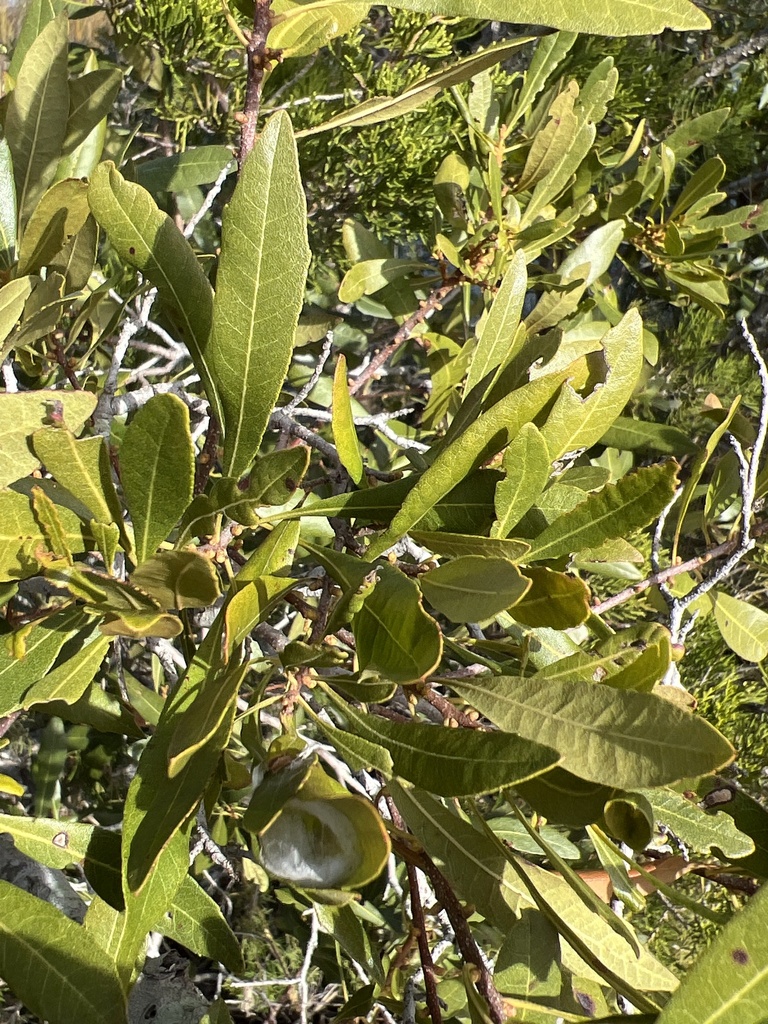
Overview
Bayberry, or wax myrtle, is a hardy evergreen shrub of the American coastlands, best known for the fragrant wax on its berries that colonists made into candles. Its root bark has a long folk history as a warming, drying and toning remedy for colds and lax tissues. It is a strong herb that deserves respect and proper guidance.
Plant family
Myricaceae
Parts used
Root bark (main); leaves; berry wax (non-medicinal).
Actions
Astringent · Diaphoretic · Stimulant · Emetic · Sialagogue · Tonic · Febrifuge
Affinities
mucous membranes · gums and throat · circulation
Body systems
Digestive · Respiratory · Integumentary
Taste profile
Astringent, pungent and bitter.
Energetics
Warming and drying; stimulating.
Tissue states
Damp · Relaxed
Traditional use
Bayberry root bark was a mainstay of 19th-century Thomsonian and Physiomedical herbalism, most famously in 'Composition Powder' with ginger and other warming herbs, taken to break a cold or fever by bringing on a sweat. It was used for colds, fevers and catarrh (excess mucus), to tone loose bowels, diarrhea and heavy menstrual or vaginal discharge, and as a gargle or wash for sore throats, spongy or bleeding gums, sores, ulcers and itchy skin. In large doses it was used as an emetic (to bring on vomiting).
Current use
There is little modern research on bayberry, and no good clinical evidence for its uses. Today it is mainly found in traditional formulas for colds and sore throats, and as a gargle or wash for sore throats, spongy gums and minor skin complaints.
Preparation
The root bark is the main medicine: it is dried, powdered and stored airtight away from light, then taken as a decoction or in powdered formulas, or used as a gargle, mouthwash or snuff. The leaves are milder and made into a tea that can also serve as a wash or gargle. The berry wax is used for candles and soap, not medicine.
Dosage guidance
Reliable modern dosing is lacking. Traditional texts give about 0.5 to 1 g of powdered root bark, up to three times a day, short-term. Please take it internally only under the care of a qualified practitioner.
Cautions & contraindications
Please don't use bayberry during pregnancy or breastfeeding. Large doses cause nausea and vomiting. It is very high in tannins (the compounds that tighten tissue); in large amounts tannins irritate the stomach lining, can strain the liver, and are reported to make the body hold on to sodium, so avoid it if you have high blood pressure, swelling (edema), heart failure or kidney disease. Tannins also bind iron and some medicines, so take it apart from other medicines. Old animal studies found that injected bayberry extracts caused tumours, so long-term use is not advised.
Evidence notes
Winter's HERB302 page holds only the name, Latin name and family plus research links.
Web-sourced seed pending Winter's review. Sources: Plants For A Future (https://pfaf.org/user/Plant.aspx?LatinName=Myrica+cerifera)