Overview
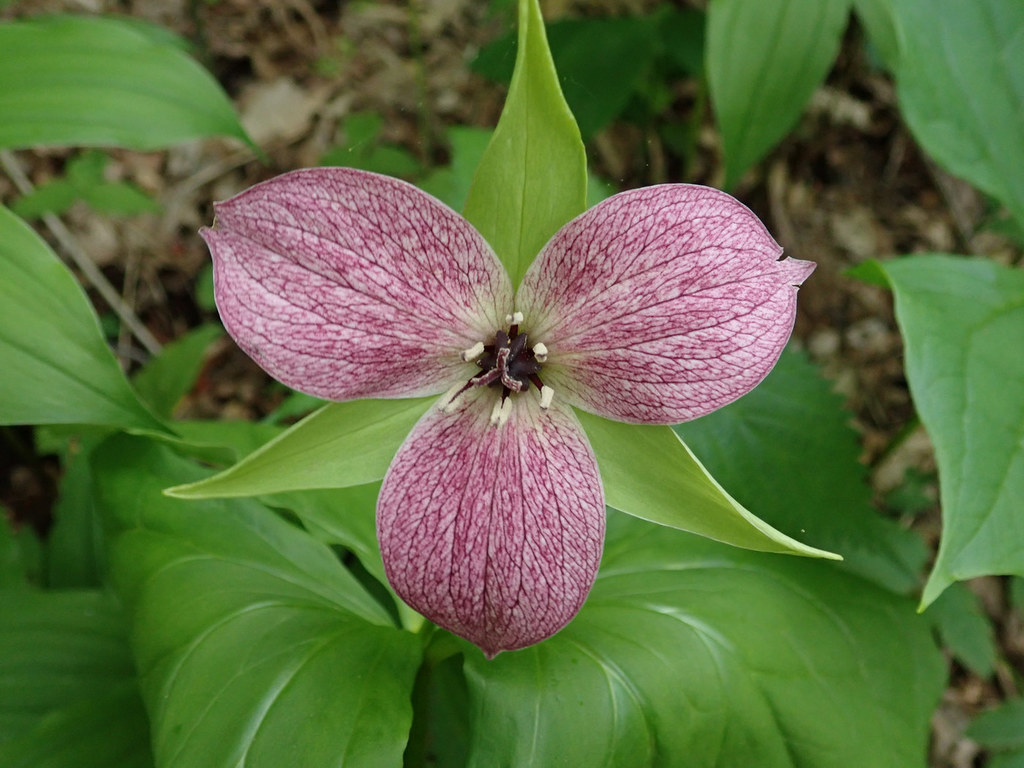
Beth root is a woodland trillium with a whorl of three leaves and a single three-petalled, maroon flower. It is valued as an astringent (it tightens and tones tissue) and a uterine tonic, with a long history of use for the female reproductive system. Wild trilliums are slow-growing and at risk, so ethical, cultivated sources matter.
Plant family
Liliaceae
Parts used
Rhizome and root (main); leaf (food).
Actions
Astringent · Tonic · Antiseptic · Expectorant · Emmenagogue · Uterine Stimulant · Uterine Tonic · Hemostatic · Alterative
Affinities
Uterus
Body systems
Reproductive · Respiratory
Taste profile
Somewhat bitter and mucilaginous (slippery), aromatic and sweetish; acrid and astringent when the root is chewed.
Energetics
Cooling and drying; astringent.
Traditional use
Native American women reportedly used it to help childbirth, which gave it the name 'birth root'. Eclectic physicians used it for bleeding of many kinds: coughing up blood, blood in the urine, heavy menstrual bleeding and uterine hemorrhage, as well as vaginal discharge (leucorrhea), cough, asthma and difficult breathing. The young leaves were eaten cooked as a potherb or raw in salads, with a taste likened to sunflower seeds.
Current use
Beth root is used in herbal practice to tone the uterus and to help with long, heavy periods and bleeding between periods. It has also been used as an expectorant for coughs, and on the skin as a poultice for varicose veins and ulcers, bruising and bleeding hemorrhoids. There is little scientific research on it.
Preparation
The rhizome and root are the main medicine for the uterus and bleeding; they are dried and taken as a tea or tincture, or ground and used as a poultice (a moist mash laid on the skin). The leaves are mostly a food plant.
Dosage guidance
There is no established oral dose; please use it only with a qualified practitioner. Topically, the ground root is used as a poultice.
Cautions & contraindications
Please avoid beth root if you have any heart condition: it is reported to contain a glycoside similar to convallamarin from lily of the valley, and heart glycosides of this type act on the heart muscle's sodium-potassium pump and can disturb heart rhythm. Don't use it during pregnancy or while breastfeeding; it may stimulate the uterus, and the American Herbal Products Association rates it Class 2b (not to be used in pregnancy). Large amounts can irritate the gut and cause vomiting, which in pregnancy can trigger reflex uterine contractions. On the skin it can cause severe irritation, so patch-test first.
Evidence notes
From Winter's HERB304 notes (M5 - P-T), citing the AHPA Botanical Safety Handbook, PDR for Herbal Medicines, Henriette's Herbal Homepage and Plants for a Future.