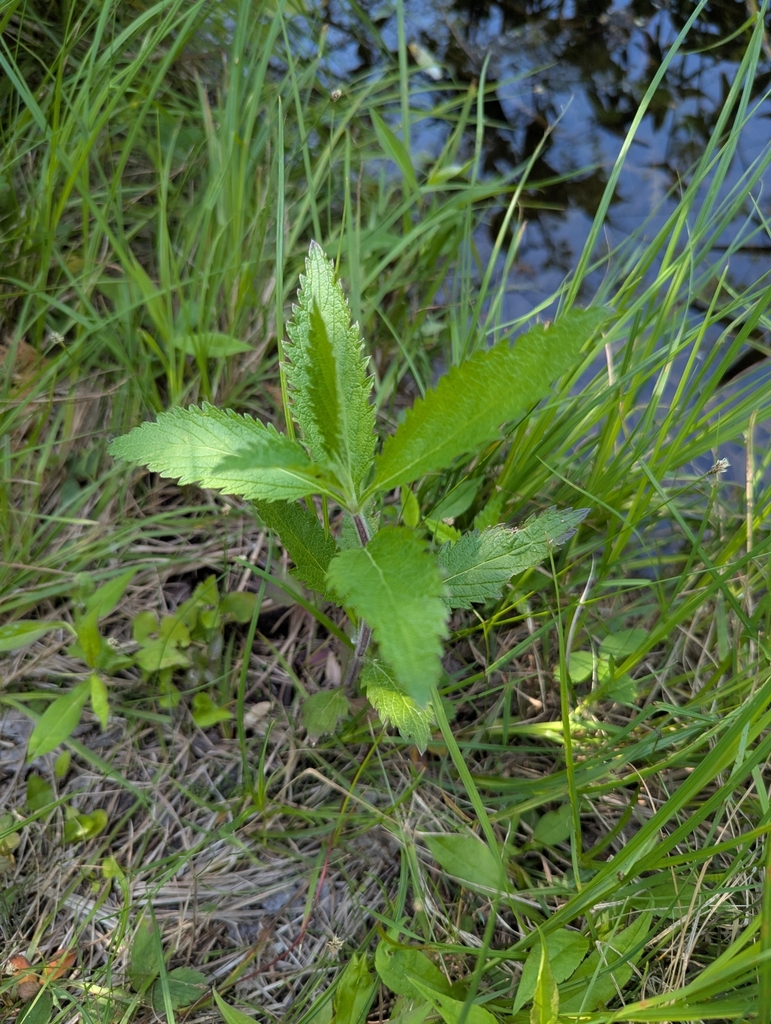
Overview
Blue vervain is an intensely bitter North American relative of European vervain, valued as a relaxing nervine, meaning an herb that calms and eases the nervous system. It is traditionally chosen for driven, tense people who push past their reserves. It is the herb that comes to mind for a stiff neck and shoulders, hormonal tension in the second half of the cycle, and stubborn fevers that won't break into a sweat.
Parts used
Flowering tops (main); roots, leaves and mature seeds traditionally.
Actions
Nervine · Relaxant · Antispasmodic · Anticonvulsant · Diaphoretic · Febrifuge · Bitter · Expectorant · Emetic · Astringent · Tonic · Diuretic
Affinities
Nervous system · Neck and shoulders · Hormonal system · Skin (sweat) · Liver
Body systems
Nervous · Reproductive · Respiratory · Digestive · Integumentary
Taste profile
Intensely bitter and acrid (sharp).
Energetics
Cooling; in large doses it can send a chill through the body.
Tissue states
Tense · Dry · Atrophy
Traditional use
European vervain was a plant of magical repute among the Druids, used for protection, and Dr. Bach chose it as a flower remedy for over-intense, driven people who push their ideals on others. Wood describes blue vervain for tall, thin, strong-willed people who lack the stamina to sustain their drive; in Chinese terms, 'yin not holding down the yang'. William LeSassier used it to open the skin and bring on sweating, and for problems in the progesterone half of the cycle. Traditional uses also include headache and earache, sore eyes, mouth ulcers and spongy gums (as a mouthwash), colds, whooping cough, croup and asthma, indigestion and gallstone colic, kidney stone and bladder spasm, labour, poor milk supply, seizures beginning at the neck, sprains from hyperextension, convulsions after draining fevers, and dry skin and eczema.
Current use
Blue vervain is used by herbalists to support high-strung, idealistic, overworked people with busy minds and tension at the nape of the neck. It is traditionally used for premenstrual tension, irritability and food cravings; menopausal hot flashes; painful or irregular periods; spasmodic coughs and congestion; sluggish digestion and liver congestion; and fevers that need help to break a sweat. There is little clinical research; lab studies show anti-inflammatory and mild sedative effects in animals.
Preparation
The flowering tops are the main medicine: gather them at the height of flowering and tincture them fresh in alcohol, or dry them for infusion (tea). The roots, leaves and mature seeds have also been used. The tea makes a mouthwash for mouth ulcers and soft gums. Be warned that it is extremely bitter and hard to take, which is one reason small tincture doses are favoured.
Dosage guidance
Wood's dose: 1 to 3 drops of tincture, 1 to 3 times a day. More can be used, but large doses can cause nausea and vomiting. For comparison, the course text for European vervain gives 2 to 4 g of herb as tea three times a day.
Cautions & contraindications
Please avoid blue vervain during pregnancy (European vervain is rated Class 2b by AHPA) and if you are trying to conceive or taking fertility treatment, since some vervains have shown hormonal and contraceptive effects in lab studies. Large doses cause nausea and vomiting. Use caution with liver disease, with medicines processed by the liver's cytochrome P450 enzymes, and with overactive digestive disorders. Avoid it if you are allergic to the verbena family.
Evidence notes
From Winter's Herb101 notes (Assignments; Tissue States; Wind - Constrictive Tissue State), citing Matthew Wood, The Practice of Traditional Western Herbalism (pp. 172-175), with references to William LeSassier, Dr. Edward Bach, Dorothy Hall and Michael Moore.