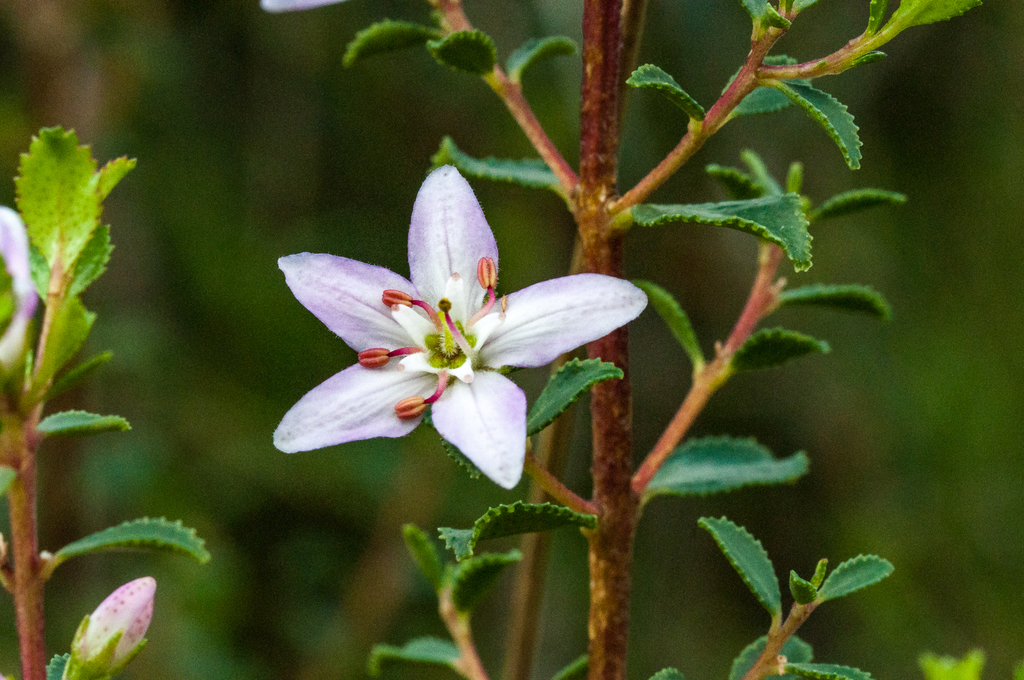
Overview
Buchu is a small, strongly aromatic shrub from the mountains of South Africa's Western Cape, where Indigenous Khoi and San peoples have long valued its leaves. It is best known as a herb for the bladder and urinary tract. Its blackcurrant-and-mint scent is lovely, but its oil carries a compound that can stress the liver, so it asks for real respect.
Plant family
Rutaceae
Parts used
Leaves.
Actions
Diuretic · Urinary Antiseptic · Antiseptic · Carminative · Diaphoretic · Stimulant
Affinities
Bladder · Urinary tract
Body systems
Urinary · Digestive
Taste profile
Aromatic, pungent and slightly bitter, with a minty, blackcurrant-like scent.
Energetics
Warming and drying (aromatic, stimulating).
Traditional use
Cape peoples chewed the leaves and used them for stomach complaints, and buchu brandy and buchu vinegar were old Cape household remedies for the stomach and for washing wounds. In 19th-century European and American medicine it became a popular remedy for bladder irritation, cystitis (bladder inflammation), urethritis and prostate discomfort, and it was also used for indigestion, gas, bloating and as a mild sweat-promoting remedy for fevers.
Current use
Buchu still appears in some urinary-support blends, traditionally for mild bladder irritation and as a gentle diuretic, meaning it increases urine flow. Scientific documentation is thin: lab studies show some antimicrobial and anti-inflammatory activity in the oil, but there are no solid human trials, and Germany's Commission E (the German government's herbal review panel) did not approve it for urinary complaints because effectiveness was not documented.
Preparation
Only the leaves are used. They are prepared as an infusion (a steeped tea, covered while steeping so the aromatic oil is not lost) or as a tincture (an alcohol extract). The concentrated essential oil should not be taken by mouth.
Dosage guidance
Traditional references give about 1-2 g of dried leaf as an infusion up to three times a day, for short periods only. Because of the pulegone concern below, I would recommend using buchu only with guidance from a qualified practitioner rather than as a routine home remedy, and never the essential oil internally.
Cautions & contraindications
Please do not use buchu during pregnancy (it was historically used to bring on menstruation) or breastfeeding, for young children, or if you have liver or kidney disease or an active kidney infection. Buchu leaf oil contains pulegone, the same compound that makes pennyroyal dangerous. Pulegone is processed in the liver into menthofuran and other reactive compounds that use up glutathione, the liver's own protective antioxidant; once glutathione runs low, those compounds damage liver cells, and at high doses they can also injure the lungs. Round-leaf buchu (A. betulina) carries only a few percent pulegone in its oil, while oval-leaf buchu (A. crenulata) and hybrids can carry far more, so the species you buy matters. Buchu often upsets the stomach and can irritate the kidneys in large amounts. If you take lithium, blood thinners or other medicines sensitive to diuretics, please use it only under a physician's care.
Evidence notes
Winter's HERB302 notes (M7 - Diuretic Herbs) give only name, Latin and family plus course resource links. Web-sourced seed pending Winter's review. Sources: EBSCO Research Starters: Buchu (https://www.ebsco.com/research-starters/nutrition-and-dietetics/buchu-dietary-supplement)