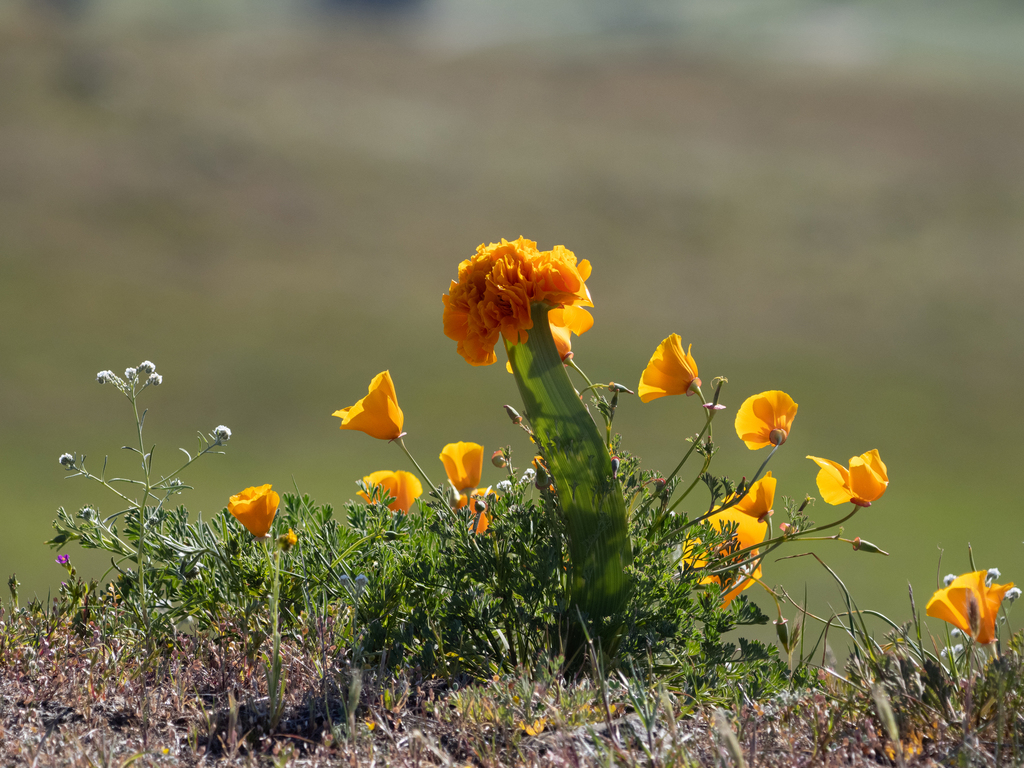
Overview
California poppy is a cheerful golden wildflower and a Native American remedy that is now widely used in Europe as a gentle relaxant. I love California poppy for easing nervous tension, supporting restful sleep and soothing aches and cramps. Its mild, cooling nature makes it one of the most reliable relaxing herbs for children and adults alike.
Plant family
Papaveraceae
Parts used
Dried aerial parts (the parts that grow above ground).
Actions
Mild sedative · Analgesic · Antispasmodic · Anxiolytic · Diaphoretic · Diuretic · Anodyne · Hypnotic · Nervine
Affinities
Nervous system
Body systems
Nervous · Musculoskeletal
Taste profile
Mildly sour and bitter, with a slight numbing sensation on the tongue.
Energetics
Cooling.
Tissue states
Hot · Tense
Traditional use
Native American peoples used it for sleeplessness, aches, nervous agitation, toothache and bedwetting in children, and for bladder and liver complaints. Because it is cooling, it suits people who are nervous and run hot. Mixed with black pepper, it was used for fevers with chills (ague), jaundice and skin problems. It pairs beautifully with wild oats and St. John's wort.
Current use
I love California poppy as a mild sleep aid and relaxant for anxiousness, sleeplessness, nervous agitation, stomach cramps and toothache. Its alkaloids, mainly californine and protopine, appear to act on some of the same calming brain receptors (GABA) that anti-anxiety medicines target, and early research supports sleep-lengthening, antispasmodic, sedative and anti-anxiety effects. Studies in Germany and France support its traditional use for relaxing muscles, easing anxiety and relieving pain, and preliminary research has looked at it combined with magnesium and hawthorn for mild to moderate anxiety. In combination formulas it has been used for low mood, nerve pain and sensitivity to weather changes.
Preparation
The dried aerial parts (everything above ground, including flowers and seed pods) are prepared as a tea (an infusion, meaning the herb is steeped in hot water), as a liquid extract or tincture, or blended into sleep and relaxation formulas with other herbs. In my studies, the dried herb tasted mildly sour and bitter at first, then left a slight numbing on the tongue and a gentle wave of relaxation, much like passionflower.
Dosage guidance
Tea: steep 2 g of the dried herb in 150 mL (about 5 oz) of boiling water for 10-15 minutes, then strain; one cup up to four times a day. Liquid extract: 1-2 mL per day. For sleep, the last dose is best taken about an hour before bed.
Cautions & contraindications
Please avoid California poppy during pregnancy and while breastfeeding; there is not enough safety data. It is listed in AHPA Class 2b (the American Herbal Products Association rating for herbs not to be used during pregnancy). It may act on the same receptors as MAO inhibitors and SSRIs (types of antidepressant medication), so please use caution if you take these. Combining it with other sedating herbs or medicines, such as hops, kava, skullcap, valerian, catnip, St. John's wort, sleep medications or alcohol, may increase drowsiness. Please don't drive until you know how it affects you, and don't confuse it with corn poppy or opium poppy, which are different plants.
Evidence notes
From Winter's HERB304 notes (course monograph and Natural Medicines Database).