Overview
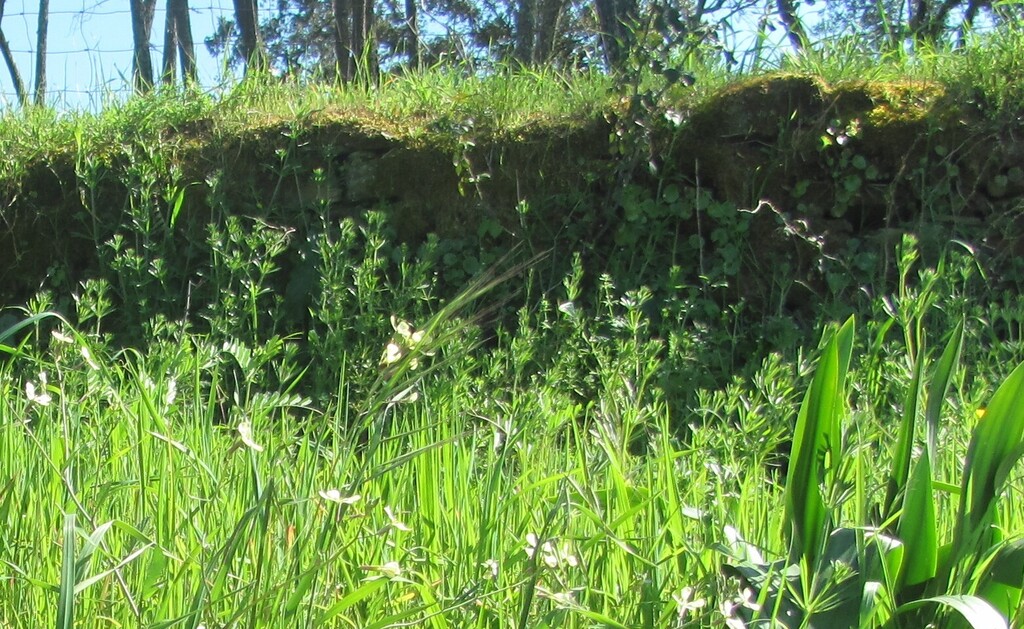
Cleavers is a sticky, scrambling spring green that clings to clothing like Velcro. The whole plant is covered in tiny hooked hairs, and its round, fuzzy little seeds hitch a ride on anything that brushes past, so if you've ever walked through a patch, you'll know it. Here in Houston it grows like an ordinary weed, especially in rich, nitrogen-heavy soil with plenty of leaf litter, and it grows abundantly in my own backyard. It is treasured as a gentle lymphatic herb, helping the body's drainage network move stagnant fluids along.
Plant family
Rubiaceae
Parts used
Aerial parts, gathered before seeding, best fresh.
Actions
Lymphatic · Diuretic · Alterative · Anti-inflammatory · Astringent · Tonic · Nutritive · Aperient
Affinities
Lymphatic system · Kidneys and bladder · Nerves · Skin
Body systems
Lymphatic · Urinary · Nervous · Integumentary
Taste profile
Fresh and 'green' when prepared as a cold infusion; traditionally described as slightly sweet and salty or minerally, with a faint vanilla note when fresh.
Energetics
Cooling and moistening.
Tissue states
Dry · Atrophy
Traditional use
Cleavers is a long-standing folk remedy for lymphatic congestion, especially swollen glands under and behind the ears after an infection, for fluid retention and swelling of the hands and feet, and for the bladder, kidneys and male reproductive system (an inflamed or enlarged prostate, sore testicles). The herbalist Matthew Wood also describes it for a sensitive, over-stimulated nervous system, irritable restlessness, dry eyes, skin that tickles and itches easily, tension and nodules in nerves and tendons, fibrous or cystic build-up in the tissues (including fibrocystic breasts), and feverish skin eruptions. Folk use also included it for insomnia and as a slimming tea, and the roasted seeds were used as a coffee substitute. The young tips can be eaten in salads.
Current use
Cleavers is used as a tonic for the lymphatic system (the network of vessels and glands that drains fluid and waste from the tissues and carries immune cells), for swollen glands and tonsillitis, as a mild diuretic for fluid retention, and, often paired with a soothing demulcent herb, for irritated bladder and urinary tract conditions such as cystitis. It is also taken internally for skin conditions such as eczema, psoriasis and acne, where poor lymphatic drainage is thought to play a part. It is rich in vitamin C and minerals such as calcium and silica. Modern clinical research on it is limited, so these uses rest on long tradition and herbal texts. I have used fresh cleavers as a cold infusion while recovering from a cold, and found it refreshing and supportive during convalescence.
Preparation
Use the aerial parts, gathered in spring and early summer before the seeds form, while the plant still smells faintly of vanilla. Cleavers is at its best fresh, because drying loses much of its character. Many herbalists prefer a cold infusion: steep a handful of clean, young, fresh plant in cold water for several hours or overnight in the fridge, which preserves its delicate, fresh quality. This is the way I have prepared it, and it worked well for me. The fresh juice (called a succus) is traditionally considered the gold standard, and a fresh-plant tincture is the classic way to keep it year-round. A hot infusion of the dried herb can be used, though it is weaker, and the fresh plant can be applied directly to the skin as a poultice.
Dosage guidance
Infusion: 2 to 3 teaspoons of dried herb (or a small handful of fresh) per cup, three times a day; for a cold infusion, steep overnight in the fridge. Tincture: 2 to 4 mL three times a day (Hoffmann). Matthew Wood favours very small doses, 1 to 3 drops 1 to 3 times a day, though moderate and larger doses are also used. For long-standing issues it may be taken for months.
Cautions & contraindications
Cleavers is considered very safe, and no serious side effects are reported. As a diuretic, please check with your provider if you take diuretic medicines or have kidney disease. My teachers noted that plants in the same chemical group (containing coumarin-like compounds) may thin the blood, so I would use caution with blood-thinning medicines, though no bleeding problems from cleavers itself have been reported. Please seek advice before using it medicinally in pregnancy. The hooked hairs can cause mild skin irritation in sensitive people.
Evidence notes
From Winter's Herb101 notes, citing Wood, The Practice of Traditional Western Herbalism (pp. 195-198). Her HERB302 page lists the monograph header and research resources only.