Overview
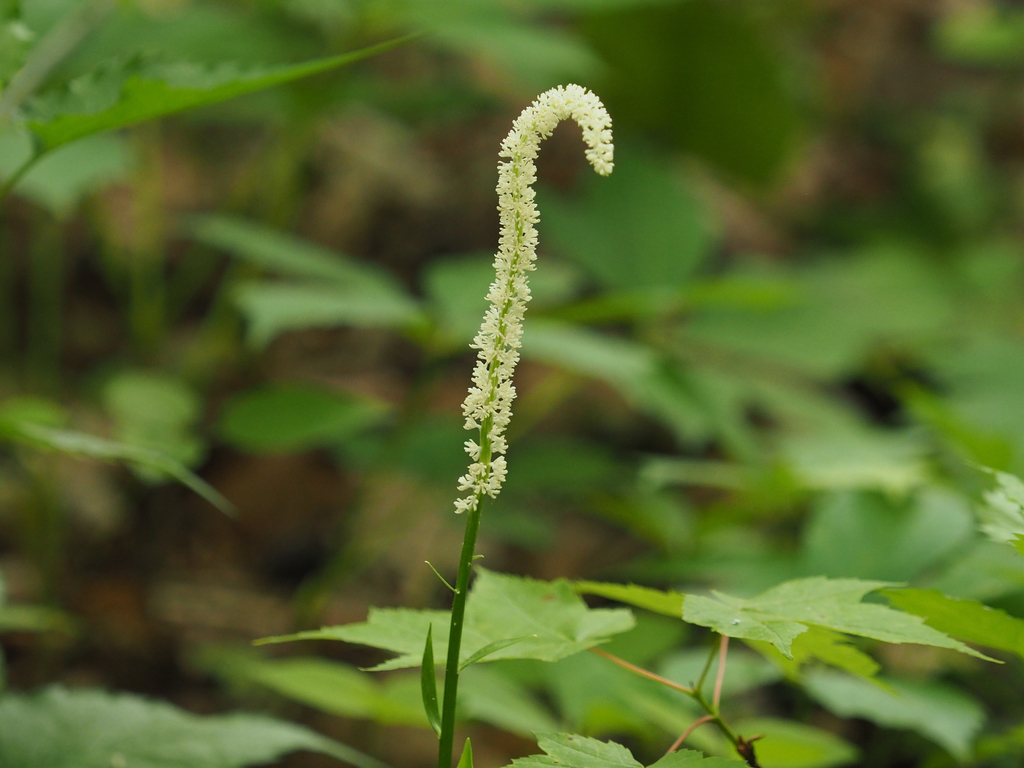
False unicorn, also known as helonias, blazing star or fairy wand, is a small woodland plant of eastern North America whose tiny white flowers form a slender spike, rising from a rosette of leaves. Its small root has been valued as a tonic for women's reproductive health, supporting menstrual and menopausal balance. It is now rare and at risk in the wild, so I would only use cultivated root, sparingly, or choose another herb.
Plant family
Liliaceae
Parts used
Rhizome (underground stem) and root.
Actions
Uterine tonic · Ovarian tonic · Emmenagogue · Uterine Stimulant · Diuretic · Anthelmintic · Tonic
Affinities
Uterus · Ovaries · Reproductive system
Body systems
Reproductive · Digestive
Taste profile
Bitter and slightly sweet, with a soapy note from its saponins.
Energetics
Neutral to slightly warming.
Traditional use
False unicorn was traditionally used for menstrual irregularities, ovarian cysts, menopause, infertility and as a general reproductive tonic. Older herbal practice also used it for threatened miscarriage and morning sickness, uses that are now considered unsafe. It was also taken as a diuretic (to increase urine flow) and to clear intestinal worms, and for poor digestion.
Current use
False unicorn is used as a uterine and ovarian tonic for irregular or absent periods, menopausal changes and fertility support, and to help hormones settle after stopping hormonal contraception. Evidence is limited to traditional use; there are no meaningful clinical trials. Its steroidal saponins (chamaelirin and related compounds) are thought to be behind its hormonal reputation. Because the plant is so scarce, many herbalists now reserve it for cases where nothing else has helped and substitute more abundant herbs such as chaste tree (vitex), motherwort or partridge berry.
Preparation
Only the small rhizome (underground stem) and its rootlets are used, harvested in autumn after the seeds have dropped, washed quickly, and dried whole because they are so small. Being a dense, woody root, it is properly prepared as a decoction rather than a simple infusion: place 1 to 2 teaspoons of dried, cut root in a cup of cold water, bring it to a boil, then simmer covered for 10 to 15 minutes before straining. The longer simmer is needed to break down the tough root and draw out its steroidal saponins. A short steep (infusion) only makes sense if the root is already finely powdered, where simmering would turn it to sludge. Because it is endangered and costly, it is most often made into a tincture (typically 1:5 in 45 to 60% alcohol), which uses far less root per dose. I would prepare it as a decoction or tincture, and only from cultivated root.
Dosage guidance
Dried root: 1 to 2 g as a decoction, three times a day. Liquid extract (1:1 in 45% alcohol): 1 to 2 mL three times a day. Tincture (1:5 in 45% alcohol): 2 to 5 mL three times a day. Higher doses can cause nausea and vomiting.
Cautions & contraindications
Please don't take false unicorn during pregnancy; it is likely unsafe because it may stimulate the uterus. Avoid it while breastfeeding too. Please don't use it if you have an infectious or inflammatory condition of the stomach or bowels, as it can irritate the gut. Too large a dose may cause nausea and vomiting. Its possible hormonal effects mean people with hormone-sensitive conditions or on hormonal medicines should check with their provider. CONSERVATION: false unicorn is on the United Plant Savers 'At-Risk' list and is slow to grow; wild-harvested root contributes to its decline, so choose certified cultivated sources or a substitute.
Evidence notes
From Winter's HERB304 notes (M1 - A-C), drawing on the HERB 304 eTextbook and Natural Medicines Database.