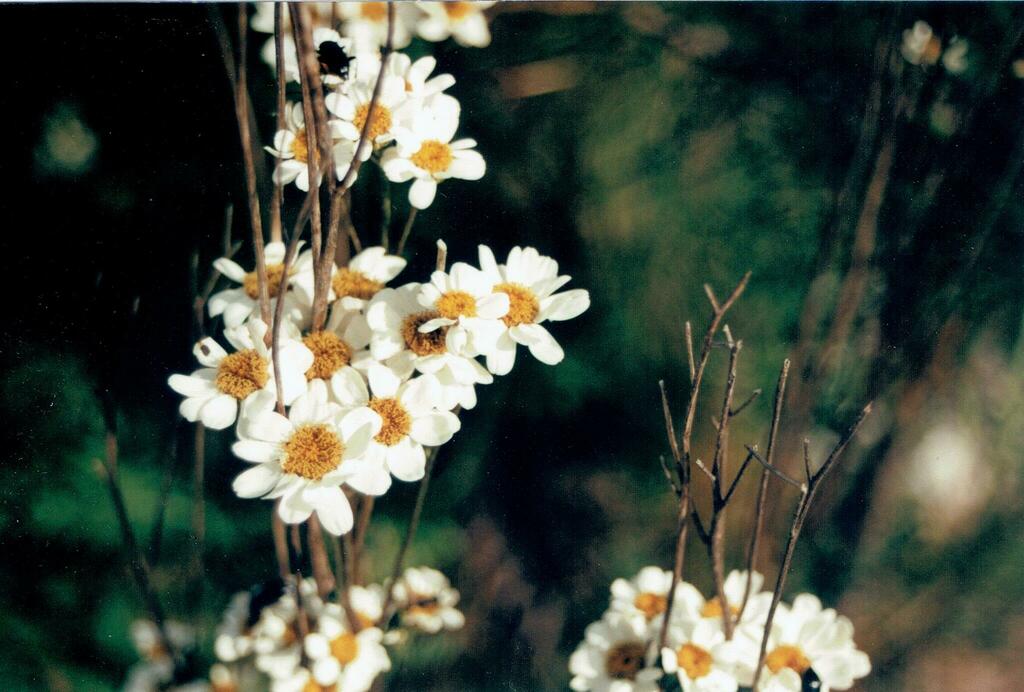
Overview
Feverfew is a cheerful, daisy-like member of the aster family whose leaves have been used for headaches and fevers for centuries. Today it is best known for helping people who are prone to migraines. It is a herb for steady, short-to-medium-term use with a few important cautions, rather than something to take indefinitely.
Plant family
Asteraceae
Parts used
Leaf (sometimes the whole flowering aerial parts).
Actions
Anti-inflammatory · Febrifuge · Analgesic · Bitter · Emmenagogue · Antispasmodic · Carminative · Vasodilator
Affinities
Head · Nervous system · Reproductive system
Body systems
Nervous · Reproductive · Digestive
Taste profile
Strongly bitter and aromatic, with a pungent, camphor-like smell.
Energetics
Generally described as cooling and drying, in keeping with its bitter taste and its traditional use for heat and fever.
Traditional use
Traditionally feverfew was used for fevers (its name comes from 'febrifuge', a herb that brings down fever), headaches and to bring on or regulate menstruation. Folk use also extended to arthritis, psoriasis, allergies, asthma, ringing in the ears, dizziness, nausea and vomiting, indigestion and wind, colds, earache and muscle tension. On the skin it was used as an insect repellent and antiseptic and for toothache. The fresh leaves were traditionally chewed, often tucked into a sandwich to soften their bitterness.
Current use
Feverfew leaf is taken by mouth to help reduce how often migraines occur, and studies of standardized extracts have shown modest benefit for some people. Its key compound, parthenolide, has been studied for calming inflammation and the signals that carry pain, and feverfew also naturally contains small amounts of melatonin. It works as a preventive taken daily, not as a rescue remedy during an attack.
Preparation
Most often taken as a capsule or extract of the dried leaf, which avoids the mouth irritation that chewing fresh leaves can cause. A mild infusion (tea) of the leaf is also used, though it is quite bitter. Traditionally one or two fresh leaves were eaten daily.
Dosage guidance
For migraine prevention, studies have used 50 to 100 mg of feverfew extract daily; benefits are usually judged over several weeks to a few months. There is no established dose for use on the skin. When stopping after regular use, taper gradually rather than stopping abruptly.
Cautions & contraindications
Please avoid long-term use and stop gradually: a 'post-feverfew syndrome' of rebound headaches, anxiety, poor sleep and stiff muscles and joints has been reported when people stop suddenly. Feverfew may reduce the stickiness of platelets (the blood cells that help clotting), so combining it with blood thinners or with herbs like angelica, clove, danshen, garlic, ginger, ginkgo, Asian ginseng, horse chestnut, red clover or turmeric could increase bleeding risk; human evidence for this is limited, but caution is wise, and please stop it before surgery. It can cause heartburn, nausea, diarrhea, constipation, bloating and wind. Chewing the fresh leaves can cause mouth ulcers, a sore tongue, swollen lips and occasionally loss of taste, and handling it can cause a skin rash. Why: its sesquiterpene lactones, especially parthenolide, carry a reactive chemical group that latches onto proteins in skin and mouth tissue, which the immune system can then treat as foreign, triggering irritation and allergic contact dermatitis. People allergic to ragweed, chrysanthemums, marigolds or daisies may react to it. Please avoid it in pregnancy (it was traditionally used to bring on menstruation) and while breastfeeding. The AHPA Botanical Safety Handbook lists it in Class 2b (not to be used in pregnancy).
Evidence notes
From Winter's HERB304 notes (M1 - A-C), drawing on the HERB 304 eTextbook, Natural Medicines Database and AHPA Botanical Safety Handbook.